Metric vs. Imperial Measurements in Cooking
If you love trying out new recipes online, you've definitely run into the great metric vs. imperial divide.
One minute you're looking at a European baking blog that lists flour in grams and milk in milliliters, and the next you're opening an old cookbook that uses cups, tablespoons, and fluid ounces. Let's break down the differences between these two systems so you can convert them easily.
Metric vs. Imperial (The Quick Version)
- ›The Metric System: Simple base-10 math. Weight is measured in **grams (g)** and volume in **milliliters (mL)**.
- ›The Imperial System (US Customary): Traditional units. Weight is in **ounces (oz)** and **pounds (lb)**; volume uses **fluid ounces (fl oz)**, **cups**, and **pints**.
- ›Weight conversions: 1 Ounce = 28.35 Grams. 1 Pound = 453.6 Grams.
- ›Volume conversions: 1 Fluid Ounce = 29.57 Milliliters. 1 US Cup = 236.59 Milliliters.
Convert Between Metric and Imperial
Skip the fraction math. Use our free Unit Converter Tool to translate weights and volumes between metric and imperial in seconds.
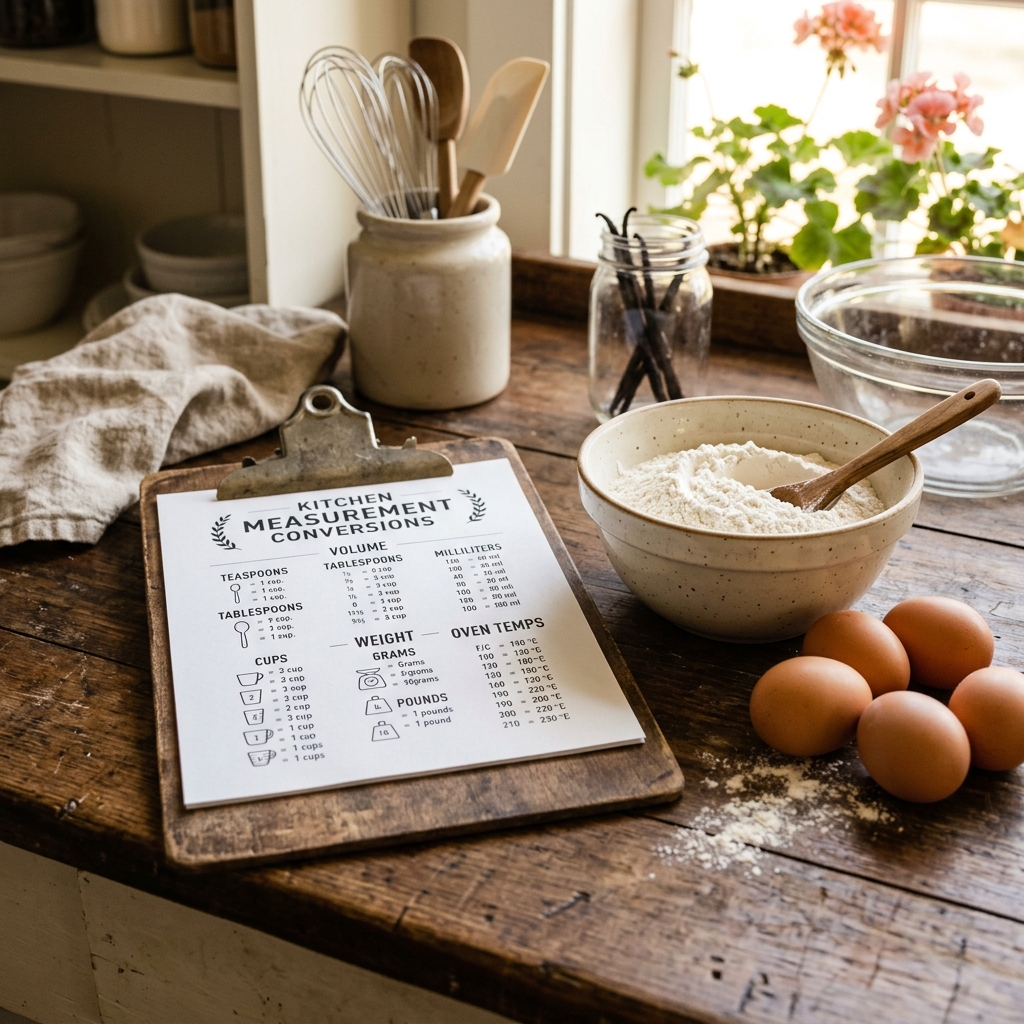
Grams to Ounces Cheat Sheet
Here is how common weights compare between the two systems:
| Imperial Sizing | Metric Sizing | Exact Conversion | Common Use |
|---|---|---|---|
| 1/2 ounce | 14g | 14.17g | Butter portions, yeast packets |
| 1 ounce | 28g | 28.35g | Chocolate bars, cheese blocks |
| 3.5 ounces | 100g | 99.22g | Standard European recipes |
| 8 ounces (1/2 lb) | 227g | 226.80g | Standard US butter blocks |
| 16 ounces (1 lb) | 454g | 453.59g | Loaf pans, flour bags |
| 2.2 pounds (35.2 oz) | 1000g (1 kg) | 997.90g | Bulk flour and sugar bags |
The metric system is built on tens, hundreds, and thousands. This means no annoying fractions or rounding errors when you scale a recipe.
Why Grams are Simply Better for Bakers
While cups and spoons are standard in American kitchens, weight in grams is what actually works for baking. Here is why you should make the switch:
- No awkward fraction math: Scaling a recipe in grams is simple. Multiplying cups, on the other hand, leaves you trying to figure out what 3/8 of a cup looks like.
- Perfect for tiny amounts: A single gram is very small, which makes it perfect for weighing out yeast, salt, or spices. Since an ounce is 28.3 grams, measuring tiny amounts in ounces gets very messy.
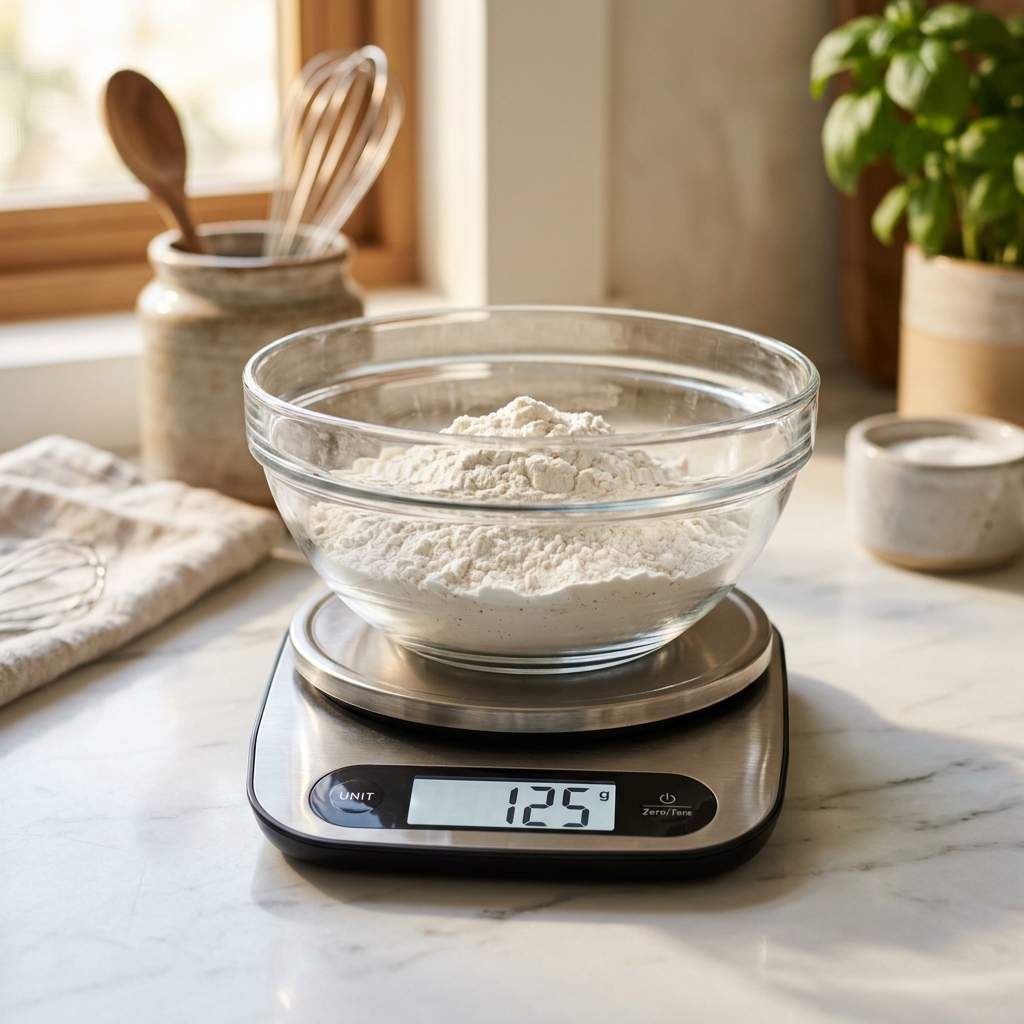
- Weight is always weight: 100 grams of sugar and 100 grams of flour weigh exactly the same. Volume cups change weight depending on how tightly packed the flour is.
Kitchen Reference
Let Us Do the Math
Take the math out of cooking.
Our free Unit Converter Tool lets you translate dry weights and liquid volumes between metric and imperial in a flash.
Related Measurement Tools
Keep your conversions clean with these handy tools:
- Unit Converter — Convert weight and volume units between systems.
- Ounces Converter — Convert dry and fluid ounces.
- Cups to Grams Converter — Switch cups of baking ingredients to grams.
- mL and Cups Converter — Adjust regional liquid cups.
Wrap Up
Learning the difference between metric and imperial is the key to mastering recipes from all over the world. Grab a digital kitchen scale, use its unit-switch button, and use our converters to take all the guesswork out of your cooking.
Frequently Asked Questions
Recommended Reading
US Cups vs. Australian Cups: Why Your Recipe Might Be Failing
A US cup is 236.6 ml, but an Australian cup is 250 ml. Here is how that 6% difference can ruin your baking, and how to swap them easily.
How Many Grams Are in a Cup? (It's Not as Simple as You Think)
Looking for a quick way to convert cups to grams? Here is a simple, ingredient-by-ingredient guide to what one cup actually weighs in the real world.
How to Convert Any Recipe from Cups to Grams
Tired of guessing how much a cup of flour actually weighs? Here is how to convert any cup-based recipe to grams so your bakes turn out perfect every single time.