How Many Grams Are in a Cup? (It's Not as Simple as You Think)
If you're looking for a single conversion number to translate cups to grams, I have some bad news: it doesn't exist.
A cup measures volume (how much space something occupies), while a gram measures weight. Because different ingredients have different densities, a cup of flour weighs something completely different from a cup of sugar or a cup of chocolate chips.
Quick Reference: Gram Weights for 1 US Cup
- ›Water / Milk: 240 grams
- ›All-Purpose Flour: 120 grams (spooned & leveled)
- ›Granulated White Sugar: 200 grams
- ›Brown Sugar (Packed): 200 grams
- ›Butter (Solid): 227 grams (2 sticks)
- ›Cocoa Powder: 100 grams
- ›Rolled Oats: 90 grams
Let Us Do the Math
No more guessing in the kitchen. Use our free Cups to Grams Converter to swap cups for exact grams for over 100 ingredients.
Why Density Rules the Kitchen
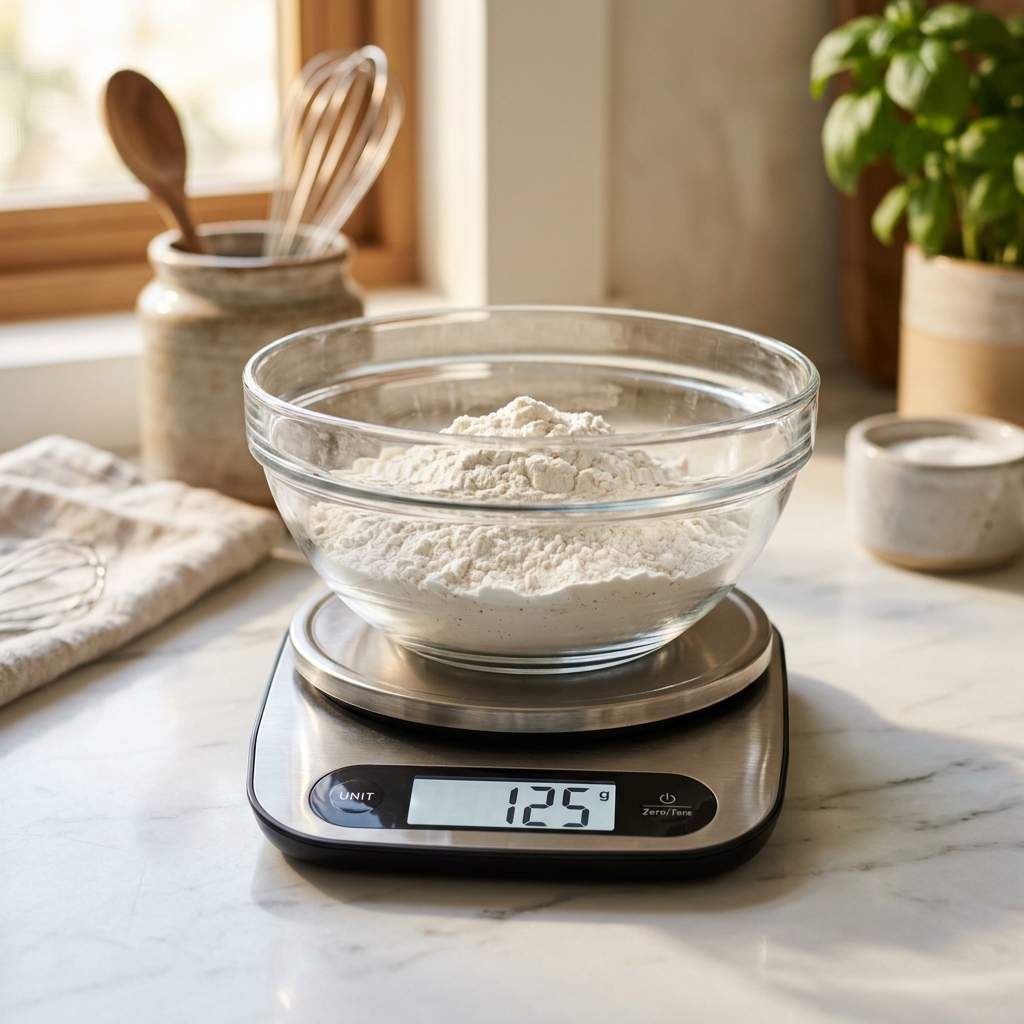
To see why a cup of flour is 120 grams while a cup of sugar is 200 grams, think about golf balls vs. ping pong balls. A bucket filled with golf balls takes up the same space as a bucket of ping pong balls, but the golf balls are going to weigh a lot more because they're solid and dense.
It's the same in baking. Flour is powdery and dusty, with lots of air trapped between the grains. Sugar is made of hard, heavy crystals that pack tightly together with almost no air gaps. That's why a cup of sugar weighs nearly twice as much as a cup of flour.
A cup only measures space. A cup of sugar is nearly double the weight of a cup of flour.
The Ultimate Cup-to-Gram Cheat Sheet
Here is a quick cheat sheet for the most common baking ingredients:
| Ingredient | 1 US Cup (Grams) | 1 Metric Cup (Grams) |
|---|---|---|
| Water / Milk | 240g | 250g |
| All-Purpose Flour | 120g - 125g | 127g - 132g |
| Granulated White Sugar | 200g | 210g |
| Brown Sugar (Packed) | 200g - 213g | 210g - 225g |
| Butter (Solid) | 227g | 240g |
| Cocoa Powder | 100g | 105g |
| Rolled Oats | 90g | 95g |
| Powdered Sugar | 120g | 127g |
Tips for Getting It Right
If you're converting a cup-only recipe, keep these quick tips in mind:
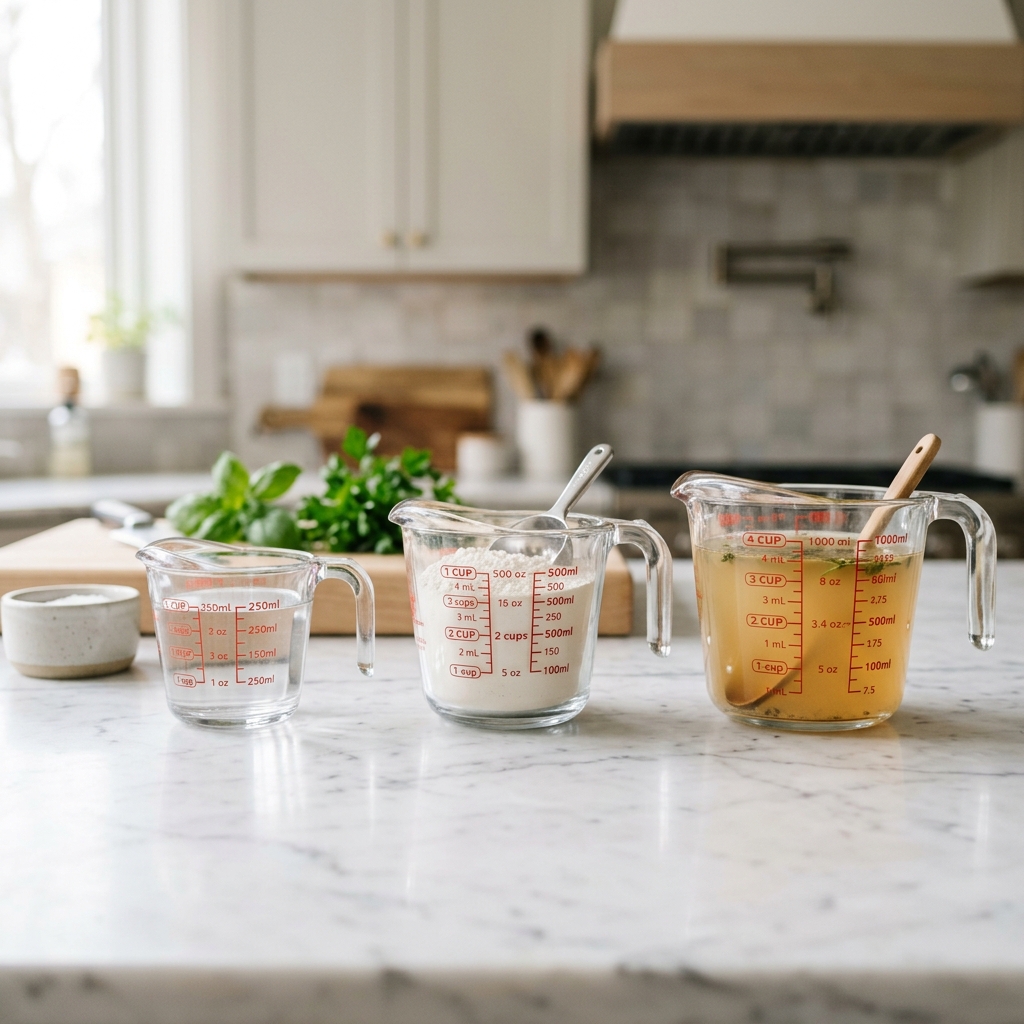
- Assume the standard: For flour, most US recipes are written assuming a cup is about 120 to 125 grams.
- Spoon and level: If you don't have a scale, fluff up your flour, spoon it gently into the cup, and scrape the excess off flat with a knife. Never scoop straight from the bag—that packs the flour down.
- Use a quick tool: For sticky ingredients like honey or peanut butter, use an online converter to save yourself the mess.
Baker's Note
The Dangerous Baking Myth: '1 Cup = 240 Grams'
A lot of people assume that since a cup holds 8 fluid ounces, a cup of anything must weigh 240 grams (or 8 ounces).
This rule **only** works for water and water-like liquids (like milk, broth, or juice). If you use that number for flour or cocoa powder, you'll end up adding way too much dry ingredient to your dough, and your cakes will turn out dry and crumbly.
Let Us Do the Math
Want to skip the kitchen math?
Our free Cups to Grams Converter lets you choose your ingredient, plug in the cups, and get the exact weight in seconds. You can even convert grams back to cups if you need to.
More Handy Kitchen Tools
Keep your kitchen conversions easy and fast with these other free tools:
- Cups to Grams Converter — Swap volume cups for precise grams.
- Grams to Cups Converter — Turn grams back into cups when needed.
- Unit Converter — Quickly move between metric and imperial.
- Baking Pan Size Converter — Swap baking pans without ruining the depth.
Wrap Up
For liquids, converting cups to grams is simple. But for dry ingredients, density changes everything. Grab a digital scale, weigh your ingredients, and say goodbye to baking guesswork forever!
Frequently Asked Questions
Recommended Reading
US Cups vs. Australian Cups: Why Your Recipe Might Be Failing
A US cup is 236.6 ml, but an Australian cup is 250 ml. Here is how that 6% difference can ruin your baking, and how to swap them easily.
How to Convert Any Recipe from Cups to Grams
Tired of guessing how much a cup of flour actually weighs? Here is how to convert any cup-based recipe to grams so your bakes turn out perfect every single time.
Common Kitchen Conversions: The Cheat Sheet Every Cook Needs
Tired of searching for kitchen conversions? Here is a simple guide to swap between teaspoons, tablespoons, cups, ounces, and pints without the math headache.