How to Convert Any Recipe from Cups to Grams
So you finally bought a kitchen scale—congrats! You're ready to start baking with real precision. But then you open up a favorite old recipe, and it's a mess of cups, scoops, and awkward fractions.
Don't sweat it. Converting cups to grams is actually incredibly simple once you know how the math works.
Quick Cheat Sheet: Cups to Grams
- Find the ingredient's weight: Look up what one cup of that specific ingredient weighs (like 120g for flour, or 200g for sugar).
- Multiply: Take the number of cups in your recipe and multiply it by that weight. (For example, 2 cups of sugar is 2 × 200g = 400g).
- Tare your scale: Pop your mixing bowl onto the scale, hit 'tare' to zero it out, and pour your ingredient right in.
- Spoons count too: For baking essentials like yeast or salt, switching tablespoons and teaspoons to grams makes a huge difference.
Let Us Do the Math For You
Save your brainpower for the baking. Punch your measurements into our free Cups to Grams Converter and get exact gram weights instantly.
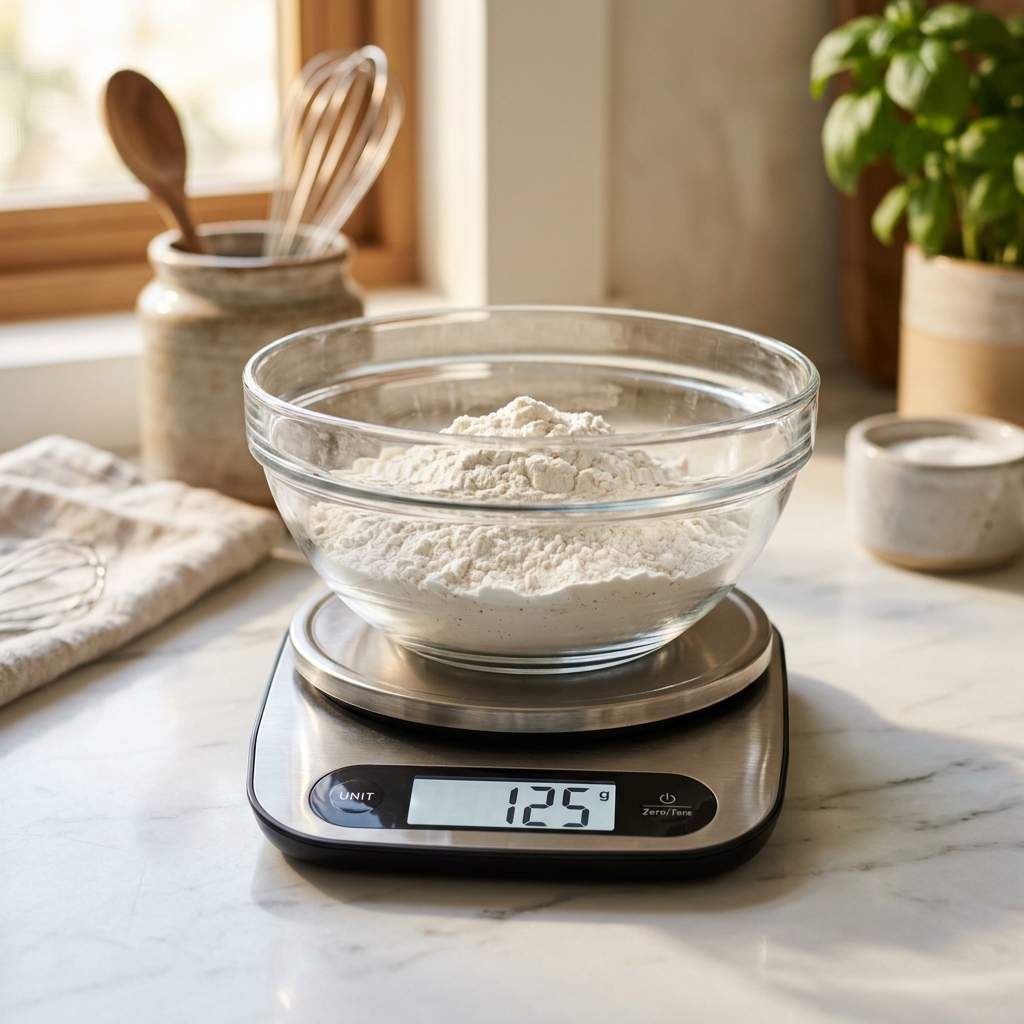
Step 1: Find the Ingredient's Standard Weight
Since different ingredients weigh different amounts, there isn't a one-size-fits-all formula. You need to know what a cup of each ingredient actually weighs. Here is a handy list of the classics:
| Ingredient | Weight per US Cup (Grams) | Conversion Formula (Cups to Grams) |
|---|---|---|
| All-Purpose Flour | 120g | Cups × 120 |
| Granulated White Sugar | 200g | Cups × 200 |
| Brown Sugar (Packed) | 200g | Cups × 200 |
| Butter | 227g | Cups × 227 |
| Water / Milk | 240g | Cups × 240 |
| Chocolate Chips | 170g | Cups × 170 |
Step 2: Multiply Cups by Weight
Now for the simple part: take the cup measurement from your recipe and multiply it by the standard weight per cup.
Example: Flour
If your recipe calls for 2.5 cups of all-purpose flour:
2.5 cups × 120 grams = 300 grams of flour
Example: Sugar
If your recipe calls for 1.75 cups of white sugar:
1.75 cups × 200 grams = 350 grams of sugar
Seriously, convert your go-to recipes once and write the weights right next to the ingredients. You'll save time and have way fewer dishes to wash.
Step 3: Handling Teaspoons and Tablespoons
If you want to be extra precise, you can even convert your small leaveners and seasonings. Here is what those tiny spoonfuls usually weigh:
- 1 teaspoon of Table Salt: ~6g
- 1 teaspoon of Baking Soda: ~5g
- 1 teaspoon of Baking Powder: ~4g
- 1 teaspoon of Instant Yeast: ~3g
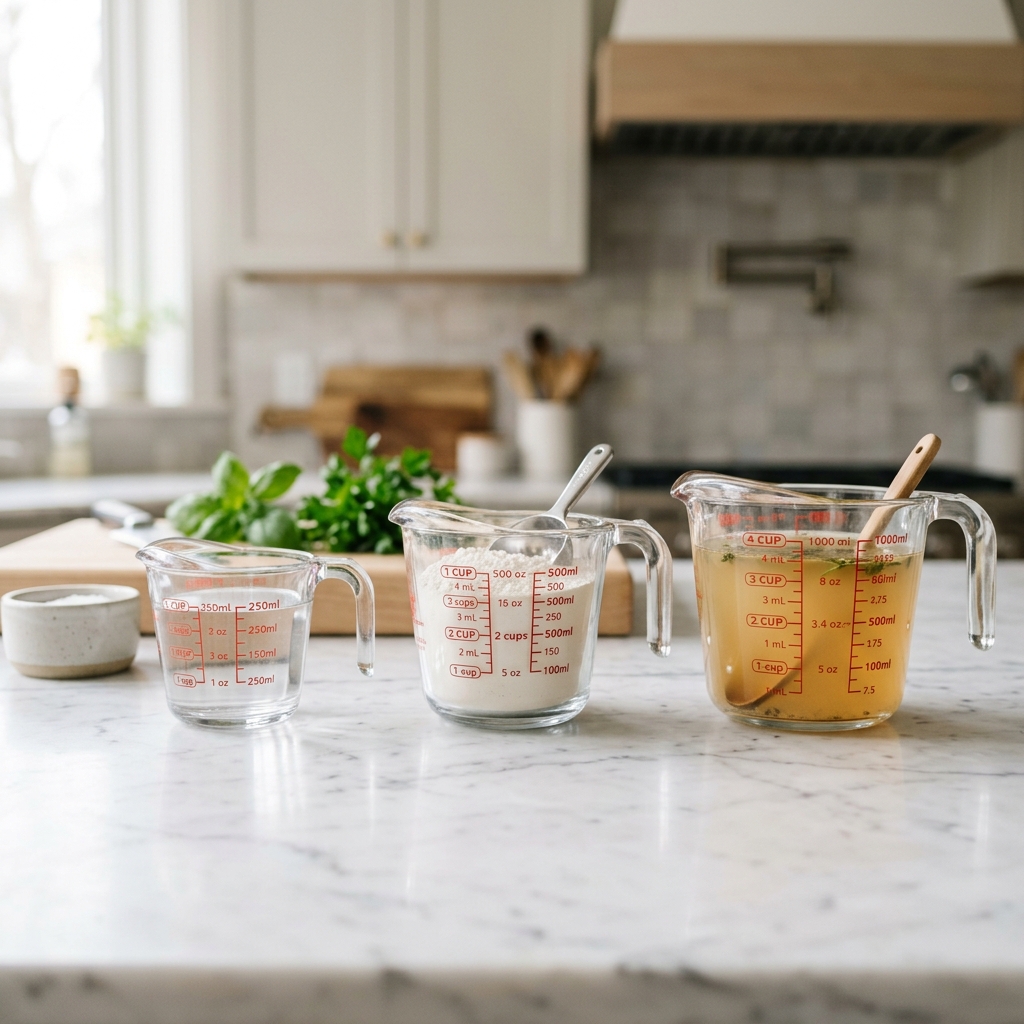
Inside the Kitchen
Skip the Math: Try the Calculator
Want to save some time?
Our free Cups to Grams Converter handles the heavy lifting. Just pick your ingredient, plug in the cups or fractions, and you'll get the exact weight in grams without breaking a sweat.
More Handy Kitchen Tools
Keep your cooking and baking perfectly accurate with these quick tools:
- Cups to Grams Converter — Swap volume for weight in a flash.
- Grams to Cups Converter — When you need to turn grams back into cups.
- Unit Converter — Quickly flip between metric and imperial.
- Recipe Scaler — Easily double or halve any recipe size.
The Verdict
Taking a few minutes to convert your recipe to grams might feel like extra homework, but trust me, it pays off. You'll get more consistent bakes, perfect textures, and you won't have a sink full of dirty measuring cups when you're done.
Frequently Asked Questions
Recommended Reading
US Cups vs. Australian Cups: Why Your Recipe Might Be Failing
A US cup is 236.6 ml, but an Australian cup is 250 ml. Here is how that 6% difference can ruin your baking, and how to swap them easily.
How Many Grams Are in a Cup? (It's Not as Simple as You Think)
Looking for a quick way to convert cups to grams? Here is a simple, ingredient-by-ingredient guide to what one cup actually weighs in the real world.
Common Kitchen Conversions: The Cheat Sheet Every Cook Needs
Tired of searching for kitchen conversions? Here is a simple guide to swap between teaspoons, tablespoons, cups, ounces, and pints without the math headache.