Kitchen Measurement Abbreviations Explained
Cookbooks and food blogs love shorthand, which means recipes are usually packed with abbreviations.
If you're new to baking, or trying to recreate a dish from a grandparent's handwritten recipe card, terms like 'T,' 't,' 'oz,' and 'pt' can look like a secret code. Let's break down these kitchen abbreviations so you can read any recipe like a pro.
The Quick Kitchen Cheat Sheet
- ›tsp / t: Teaspoon (4.9 mL)
- ›tbsp / T / Tbs: Tablespoon (14.8 mL)
- ›c / C: Cup (236.6 mL)
- ›oz: Ounce by weight (28.35 grams)
- ›fl oz: Fluid Ounce by volume (29.57 mL)
- ›g: Grams (weight)
- ›mL: Milliliters (volume)
Decode Any Kitchen Unit
Unsure what an abbreviation stands for? Drop it into our free Unit Converter Tool to translate any kitchen unit instantly.
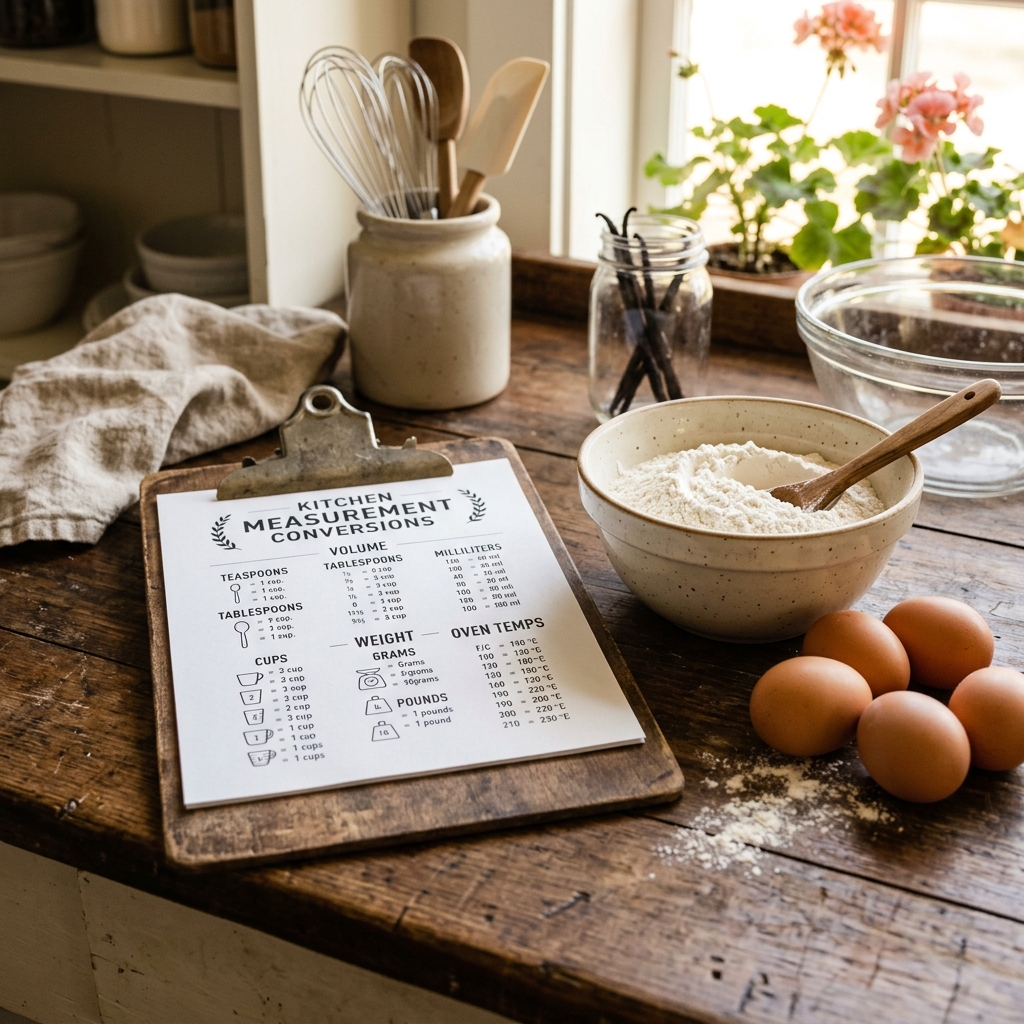
Your Go-To Abbreviations Guide
Here is a quick reference table for standard kitchen measurements and what they actually equal:
| Abbreviation | Full Unit Name | System | Standard Capacity |
|---|---|---|---|
| tsp / t | Teaspoon | Volume (US) | 4.9 mL |
| tbsp / T / Tbs | Tablespoon | Volume (US) | 3 teaspoons (14.8 mL) |
| c / C | Cup | Volume (US) | 16 tablespoons (236.6 mL) |
| fl oz | Fluid Ounce | Volume (US) | 2 tablespoons (29.6 mL) |
| pt | Pint | Volume (US) | 2 cups (473 mL) |
| qt | Quart | Volume (US) | 2 pints / 4 cups (946 mL) |
| gal | Gallon | Volume (US) | 4 quarts / 16 cups (3.78 L) |
| oz | Ounce (weight) | Weight (Imperial) | 28.35 grams |
| lb / # | Pound | Weight (Imperial) | 16 ounces (453.6 grams) |
| g | Gram | Weight (Metric) | 0.035 ounces |
| kg | Kilogram | Weight (Metric) | 2.20 pounds (1000g) |
| mL / ml | Milliliter | Volume (Metric) | 0.034 US fluid ounces |
Watch out: lowercase 't' means teaspoon (5mL), but a capital 'T' means tablespoon (15mL). Mixing them up triples or cuts your ingredient by three!
How to Read Old-School Recipes
Grandma's recipe card might contain old-school cooking symbols that you don't see in modern cookbooks anymore:
- # (Pound): In old US recipes, the hash symbol **#** represents pounds (e.g., "2# sugar" means 2 pounds of sugar).
- dz / doz (Dozen): Represents 12 items (e.g., "1 dz eggs").
- sq (Square): Represents a standard square block of baking chocolate (usually 1 ounce in the US).
- ds / pinch (Dash): A dash is historically defined as exactly **1/8 teaspoon**. A pinch is defined as **1/16 teaspoon** (what you can grab between your thumb and forefinger).
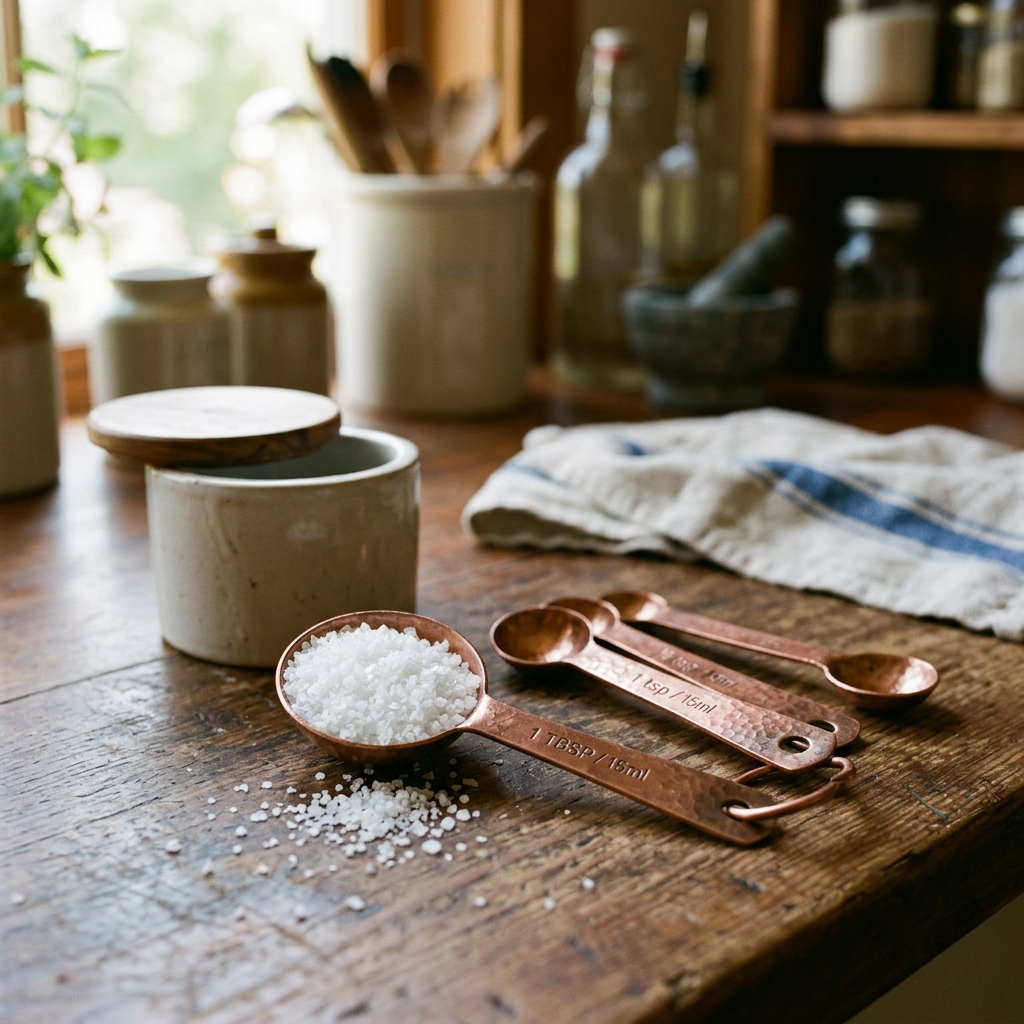
Kitchen Reference
Let Us Do the Math
Translate kitchen measurements instantly.
Use our free Unit Converter Tool to swap between cups, tablespoons, grams, and ounces in seconds.
Related Measurement Tools
Keep your conversions clean with these tools:
- Unit Converter — Switch between metric and imperial measurements.
- Tablespoons Converter — Convert cups and spoons.
- Cups to Grams Converter — Switch cups of baking ingredients to grams.
- Recipe Scaler — Scale recipe servings up or down.
Wrap Up
Decoding kitchen shorthand is the first step to becoming a confident cook. Once you know the difference between tsp, tbsp, oz, and fl oz, you'll be able to breeze through any recipe card without guessing.
Frequently Asked Questions
Recommended Reading
US Cups vs. Australian Cups: Why Your Recipe Might Be Failing
A US cup is 236.6 ml, but an Australian cup is 250 ml. Here is how that 6% difference can ruin your baking, and how to swap them easily.
How Many Grams Are in a Cup? (It's Not as Simple as You Think)
Looking for a quick way to convert cups to grams? Here is a simple, ingredient-by-ingredient guide to what one cup actually weighs in the real world.
How to Convert Any Recipe from Cups to Grams
Tired of guessing how much a cup of flour actually weighs? Here is how to convert any cup-based recipe to grams so your bakes turn out perfect every single time.