Cups to Ounces: How to Convert Liquid and Dry Ingredients
American recipes love to mix volume (cups) and weight (ounces) in the very same ingredient list.
It's super confusing. If one recipe asks for "1 cup of chocolate chips" and another asks for "6 ounces," are they even talking about the same amount? How do you switch between them? Let's break down how cups-to-ounces conversions actually work in a real kitchen.
At a Glance: Cups to Ounces Cheat Sheet
- ›Fluid Ounces (Liquid Volume): 1 US Cup is exactly **8 fluid ounces** (236.6 mL). This is purely about the space it occupies.
- ›Water: 1 Cup of water weighs **8.3 ounces** (or 236 grams).
- ›Flour: 1 Cup of all-purpose flour weighs **4.4 ounces** (or 125 grams).
- ›Granulated Sugar: 1 Cup weighs **7.1 ounces** (or 200 grams).
Skip the Guesswork
Tired of trying to remember which ounce is which? Use our free Ounces Converter to swap between cups, dry ounces, and grams in a flash.
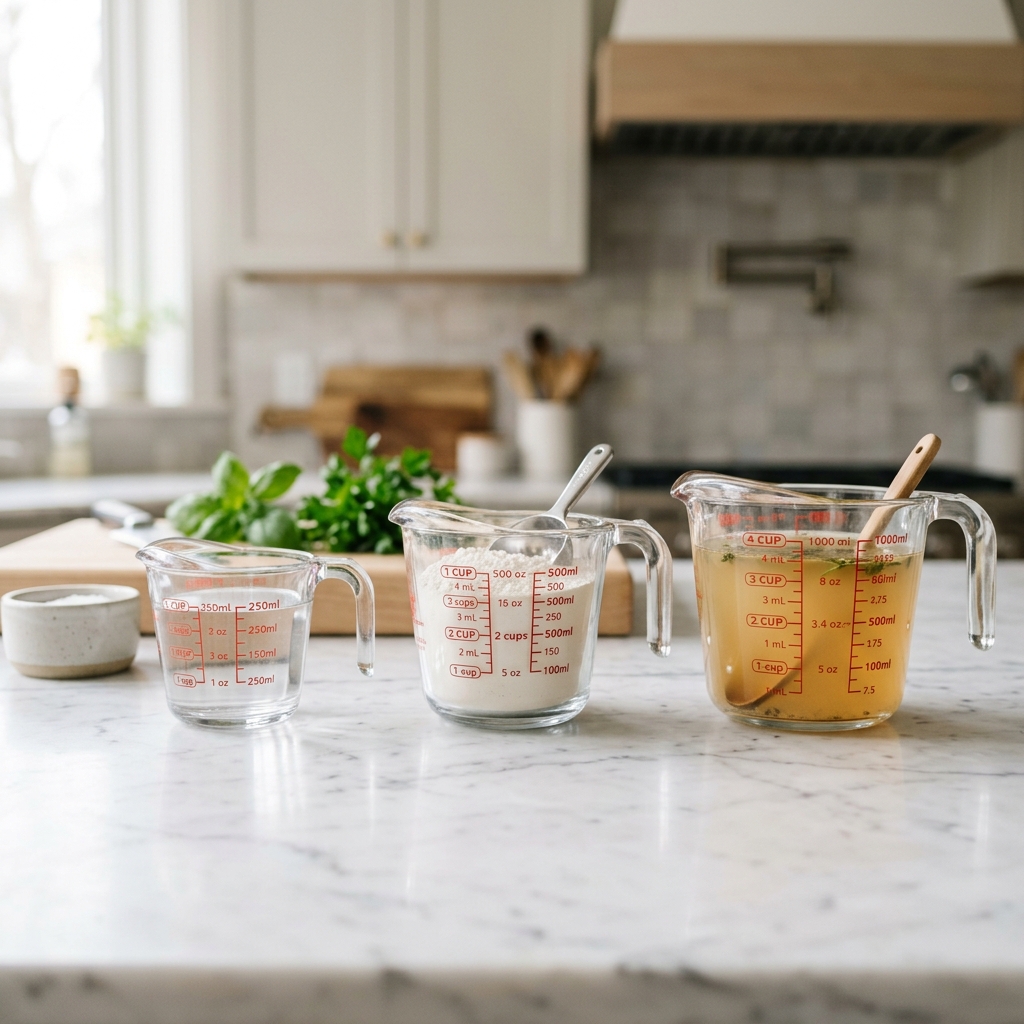
The Big Confusion: Fluid Ounces (Volume) vs. Dry Ounces (Weight)
The biggest headache in the kitchen is that the word "ounce" refers to two completely different measurements:
- Fluid Ounces (fl oz): This measures volume, or how much space something takes up. When you fill a liquid measuring cup to the "8 oz" line, you have exactly 1 cup of liquid.
- Dry Ounces (oz): This measures weight. You only get this number by putting something on a kitchen scale.
Because ingredients have different densities, filling an 8-fluid-ounce cup will give you wildly different weights depending on what you're pouring:
| Ingredient | Volume (Cups) | Volume (Fluid Ounces) | Weight (Dry Ounces) | Weight (Grams) |
|---|---|---|---|---|
| Water | 1 Cup | 8 fl oz | 8.3 oz | 236g |
| All-Purpose Flour | 1 Cup | 8 fl oz | 4.4 oz | 125g |
| Granulated Sugar | 1 Cup | 8 fl oz | 7.1 oz | 200g |
| Honey | 1 Cup | 8 fl oz | 12.0 oz | 340g |
| Butter | 1 Cup (2 sticks) | 8 fl oz | 8.0 oz | 227g |
Just remember: a cup is always 8 fluid ounces of space, but the weight can range from 4.4 ounces of light flour to a heavy 12 ounces of honey.
How to Do the Conversion Yourself
If you want to convert cups to dry weight ounces manually, here is the trick:
- Look up what one cup of your ingredient weighs in dry ounces (like 4.4 oz for flour).
- Multiply that number by the cups your recipe calls for.
- For example: **3 cups of flour = 3 × 4.4 oz = 13.2 ounces of weight**.
Honestly, this is why using a digital kitchen scale is a total game-changer. Once you start weighing your ingredients, you can completely ignore these calculations and get perfect bakes every single time.
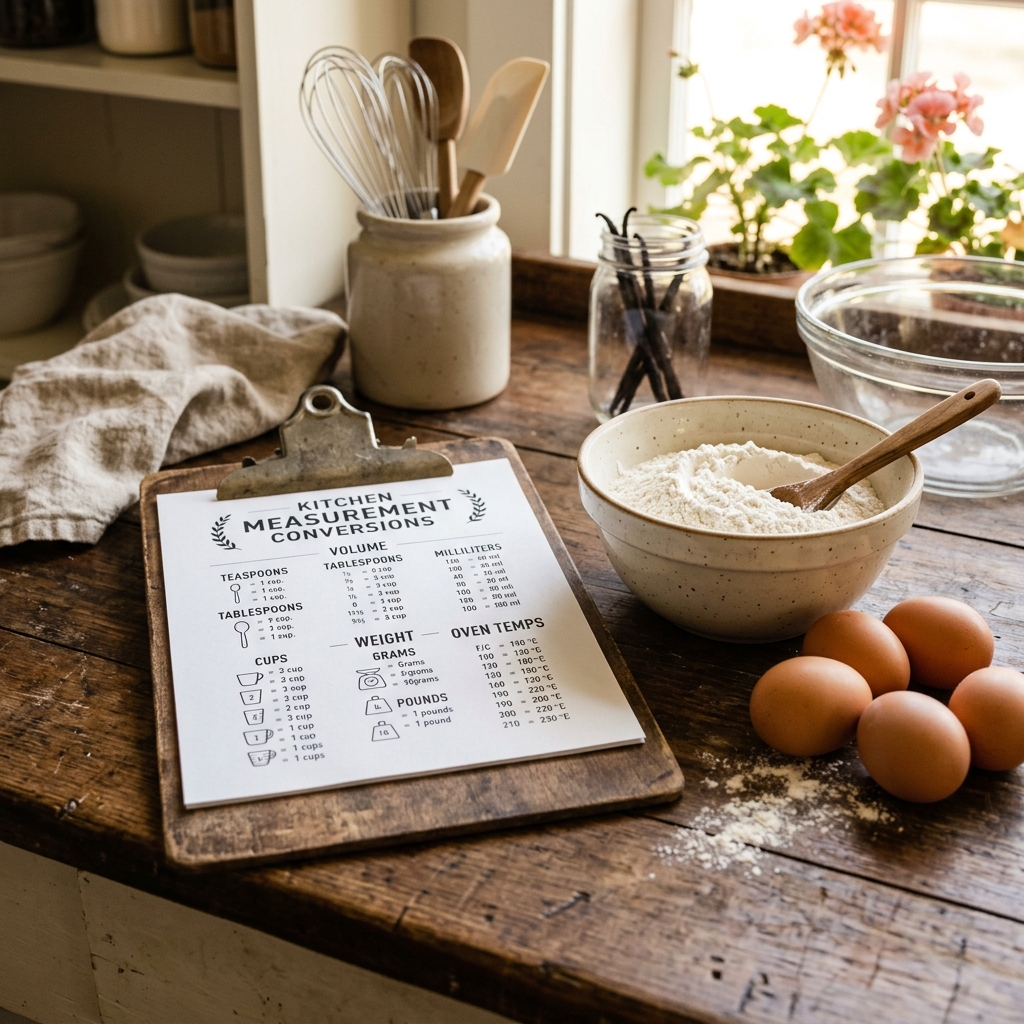
Kitchen Reference
Let Us Do the Math
Ready to skip the mental math?
Our free Ounces Converter instantly swaps cups, fluid ounces, and dry weights. It takes just a second and keeps your recipe proportions perfectly balanced.
More Kitchen Conversions
Check out these other free tools to help keep things simple in the kitchen:
- Ounces Converter — Swap fluid and dry ounces without the headache.
- Unit Converter — Quickly move between metric and imperial.
- Cups to Grams Converter — Swap volume cups for grams.
- mL and Cups Converter — Convert milliliters and liquid cups.
Wrap Up
Converting cups to ounces doesn't have to be a headache. Just keep fluid ounces (volume) and dry ounces (weight) straight in your head. Once you know what your specific ingredients weigh, you're ready to bake with confidence.
Frequently Asked Questions
Recommended Reading
US Cups vs. Australian Cups: Why Your Recipe Might Be Failing
A US cup is 236.6 ml, but an Australian cup is 250 ml. Here is how that 6% difference can ruin your baking, and how to swap them easily.
How Many Grams Are in a Cup? (It's Not as Simple as You Think)
Looking for a quick way to convert cups to grams? Here is a simple, ingredient-by-ingredient guide to what one cup actually weighs in the real world.
How to Convert Any Recipe from Cups to Grams
Tired of guessing how much a cup of flour actually weighs? Here is how to convert any cup-based recipe to grams so your bakes turn out perfect every single time.