Common Ingredient Weight Charts Explained
Walk into any professional bakery, and you'll find an ingredient weight chart taped to the wall. It is the chef's decoder ring, translating older cup-based recipes into precise, scale-friendly weights.
Because flour is light and fluffy, sugar is heavy, and butter is solid, you can't just use one simple multiplier to convert everything. Here is how baking weight charts work, along with standard weights for all your pantry essentials.
Baking Weight Cheat Sheet
- ›Dry Flours: Average **120g - 125g** per cup. Bread flour is slightly heavier (~130g).
- ›Sweeteners: Granulated sugar is **200g** per cup. Packed brown sugar is **213g**. Icing sugar is **113g**.
- ›Fats: Solid butter is **227g** per cup (113g per stick). Oils average **218g**.
- ›Liquids: Water, milk, and eggs average **236g - 244g** per cup.
Access the Full Ingredient Database
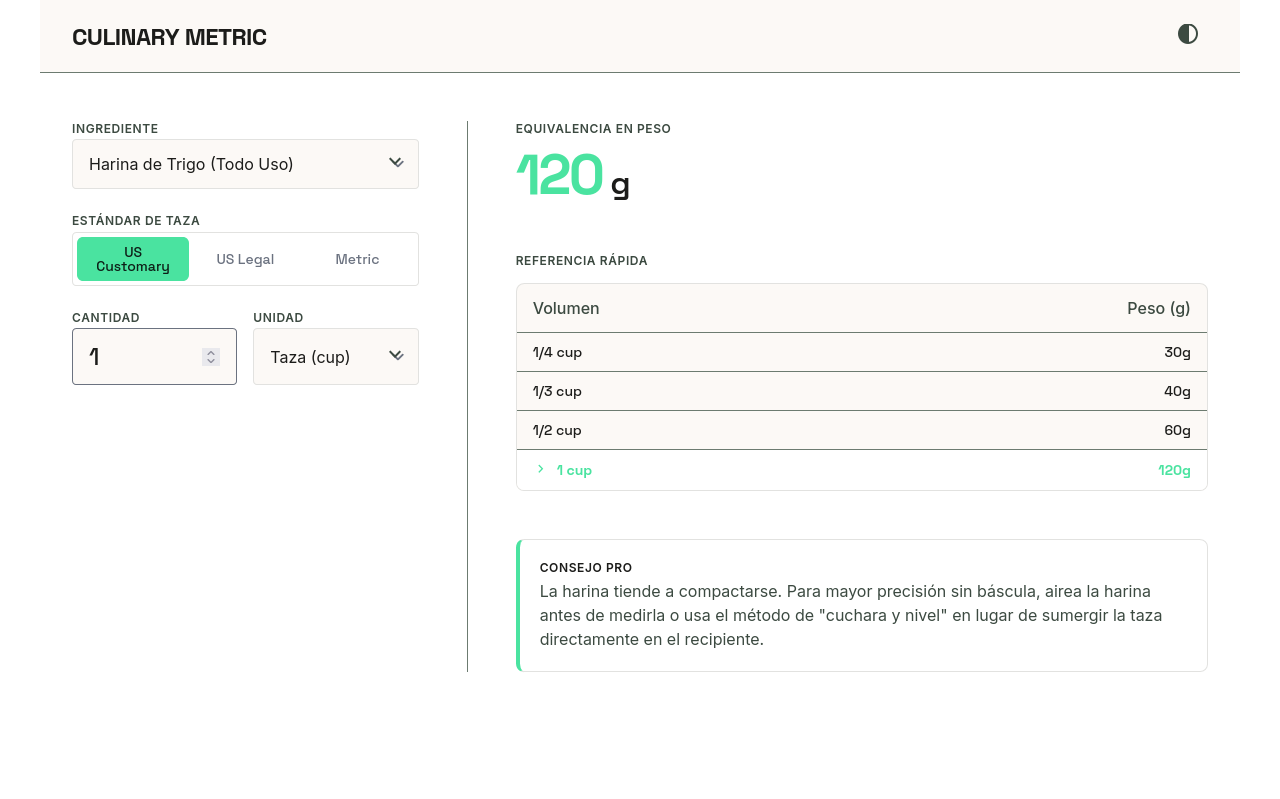
Skip the guesswork. Use our free Cups to Grams Converter to swap cups for grams for over 100 common ingredients in a second.
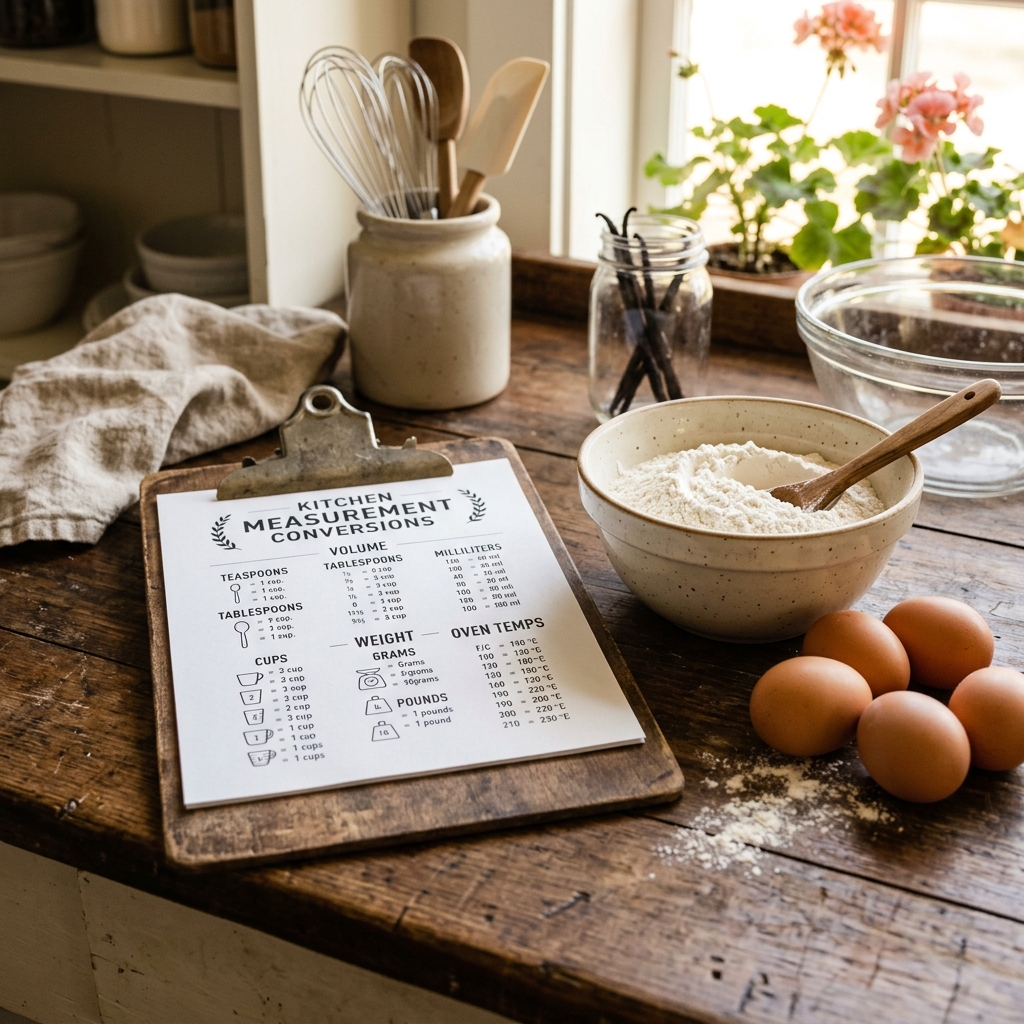
Master Ingredient Weight Chart
Here are the standard gram weights you'll want to use when converting volume recipes to weight:
| Ingredient | 1 Cup (Grams) | 1 Tbsp (Grams) | 1 Tsp (Grams) |
|---|---|---|---|
| All-Purpose Flour | 125g | 7.8g | 2.6g |
| Bread Flour | 130g | 8.1g | 2.7g |
| Granulated Sugar | 200g | 12.5g | 4.2g |
| Packed Brown Sugar | 213g | 13.3g | 4.4g |
| Powdered Sugar | 113g | 7.0g | 2.3g |
| Unsalted Butter | 227g | 14.2g | 4.7g |
| Vegetable Oil | 218g | 13.6g | 4.5g |
| Whole Milk | 244g | 15.3g | 5.1g |
| Baking Powder | 192g (N/A) | 14.0g | 4.6g |
| Baking Soda | 288g (N/A) | 18.0g | 6.0g |
| Fine Sea Salt | 288g (N/A) | 18.0g | 6.0g |
Using a weight chart removes the variables from your kitchen. It makes sure your 'cup of flour' is the exact amount the recipe developer intended.
Tips for Using a Weight Chart in Real Life
Here is how to put these numbers to work at your counter:
- Do the math: If a recipe calls for 2.5 cups of flour, just multiply the cup weight from the chart by the volume. In this case: 2.5 × 125g = **312.5 grams**.
- Keep the spoons for tiny amounts: Standard kitchen scales aren't great at measuring tiny weights under 5 grams. For leaveners and spices like baking soda or salt, stick to your measuring spoons. It's much easier to scoop a level teaspoon than to try and weigh 6 grams of salt on a cheap scale.
- Watch out for water absorption: Ingredients like whole wheat flour or rolled oats soak up moisture like a sponge. Stick to the exact chart weights to keep your dough hydration where it belongs.
Liquid Density Rule
Try Our Converter
Don't want to pull out a calculator? Use our free Cups to Grams Converter to look up standard weights for flour, sugar, butter, and more automatically.
More Baking Tools
Keep your measurements precise with these free calculators:
- Cups to Grams Converter — Convert cups of baking ingredients to grams.
- Tablespoons Converter — Swap spoons, grams, or milliliters.
- Unit Converter — Convert between metric and imperial units.
- Grams to Cups Converter — Convert weights back to volume cups.
The Bottom Line
An ingredient weight chart is one of the best tools you can have in a baking kitchen. By translating cups into solid gram weights, you can rely on a kitchen scale and stop worrying about whether your scooping technique is correct.
Frequently Asked Questions
Recommended Reading
US Cups vs. Australian Cups: Why Your Recipe Might Be Failing
A US cup is 236.6 ml, but an Australian cup is 250 ml. Here is how that 6% difference can ruin your baking, and how to swap them easily.
How Many Grams Are in a Cup? (It's Not as Simple as You Think)
Looking for a quick way to convert cups to grams? Here is a simple, ingredient-by-ingredient guide to what one cup actually weighs in the real world.
How to Convert Any Recipe from Cups to Grams
Tired of guessing how much a cup of flour actually weighs? Here is how to convert any cup-based recipe to grams so your bakes turn out perfect every single time.