How to Measure Cocoa Powder Correctly
Cocoa powder is the secret behind a perfect chocolate cake or fudgy brownie. But honestly, it's also one of the most frustrating dry ingredients to measure using cups.
Because the powder is so fine, it traps a ton of air when sifted, but packs down like clay when it sits in your pantry. Depending on how you scoop it, a cup of cocoa can weigh anywhere from 80 to 120 grams. Let's look at how to get it right every time.
Cocoa Measuring (The Quick Version)
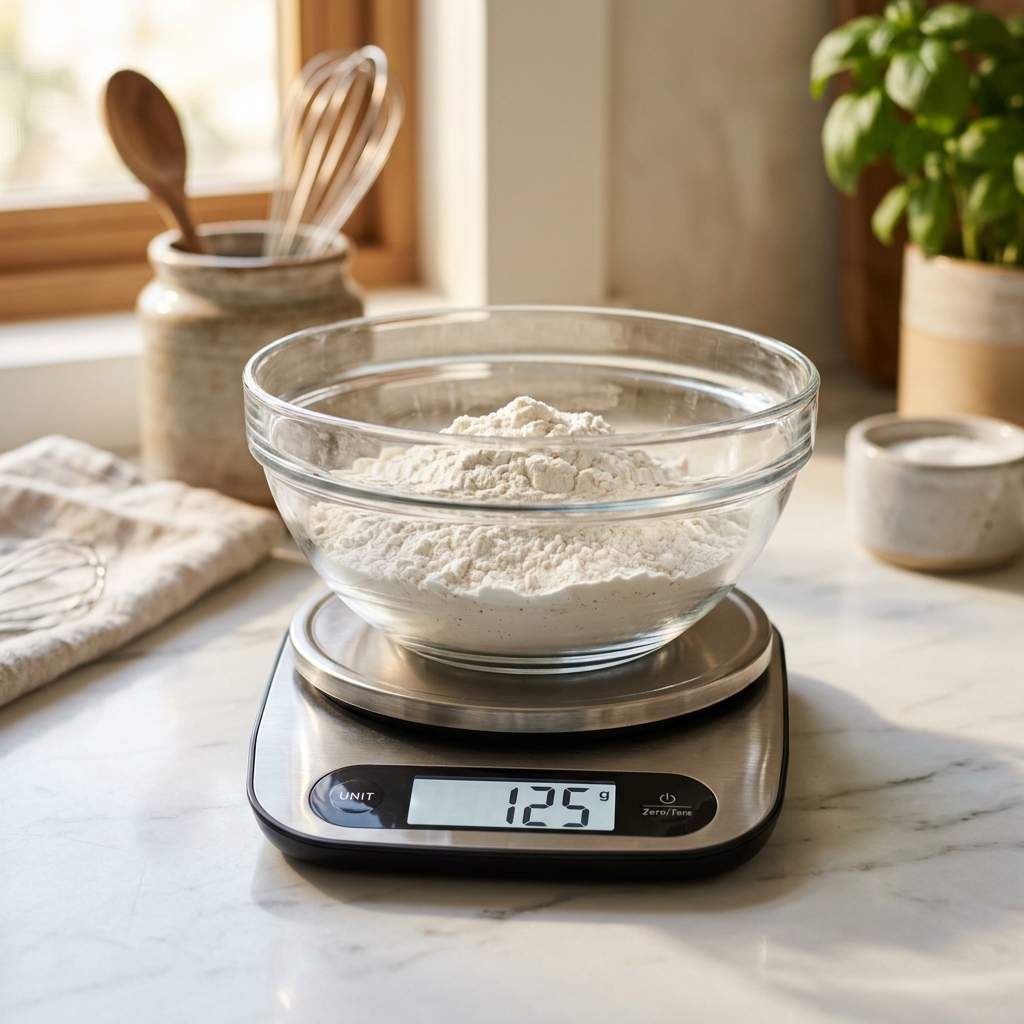
- ›Grab your scale: A cup of cocoa should weigh **85 grams** (about 5.3g per tablespoon). Weighing is the only way to get it perfectly consistent.
- ›If you must use cups: Stir the powder first to break up clumps, spoon it gently into your cup, and sweep off the top. Never pack it down or tap the cup.
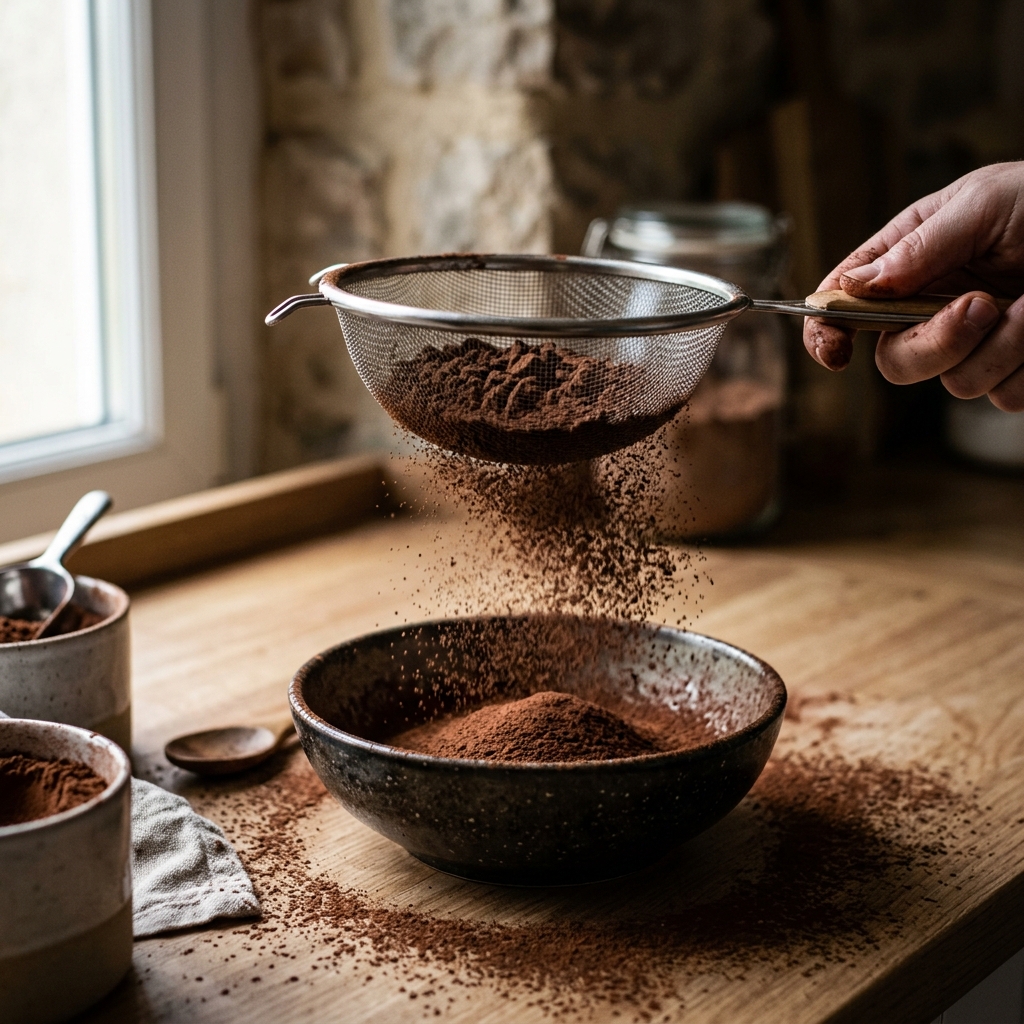
- ›Watch out for clumps: Cocoa loves to absorb moisture and form little pebbles. Trust me, you'll want to sift it so it mixes smoothly into your batter.
Convert Cocoa Cups to Grams
Don't ruin a good chocolate cake. Use our free Cups to Grams Converter to get the exact weight in grams for your cocoa powder.
Why Too Much Cocoa Ruins Your Bakes
A lot of people forget that cocoa powder acts just like flour. It absorbs liquid and builds structure, but it also has a heavy drying effect and a strong bitter edge.
If a recipe calls for 1 cup of cocoa and you scoop it straight from the container, you could easily end up adding 120 grams instead of the 85 grams the recipe developer wanted. That's 35 grams of extra drying power in your bowl—basically like tossing in a quarter-cup of extra flour. Your cake will come out dry, crumbly, and bitter, and it won't rise properly because the batter is too heavy.
| Volume Sizing | Weight (Grams) | Weight (Ounces) |
|---|---|---|
| 1 Teaspoon | 1.8g | 0.06 oz |
| 1 Tablespoon | 5.3g | 0.19 oz |
| 1/4 Cup | 21g | 0.74 oz |
| 1/3 Cup | 28g | 0.99 oz |
| 1/2 Cup | 42.5g | 1.50 oz |
| 2/3 Cup | 57g | 2.01 oz |
| 3/4 Cup | 64g | 2.26 oz |
| 1 Cup | 85g | 3.00 oz |
How to Measure Cocoa (If You Don't Have a Scale)
If you don't have a scale handy, the **spoon-and-level** method is your next best option to keep things accurate:
- Use a whisk or a fork to fluff up the cocoa powder in the container, breaking up any big clumps.
- Spoon the cocoa gently into your measuring cup until it heaps over the top. Don't shake the cup or tap it on the counter.
- Sweep the excess off the top with the flat edge of a butter knife.
- Sift it through a fine-mesh strainer into your mixing bowl to get rid of any stubborn little lumps.
Ingredient Note
Let Us Do the Math
Keep your chocolate cakes rich and moist.
Our free Cups to Grams Converter finds the exact weight in grams for your cocoa powder, ensuring a perfect bake.
Related Measurement Tools
Keep your conversions simple with these tools:
- Cups to Grams Converter — Get precise weight values for dry baking ingredients.
- Recipe Scaler — Scale recipe servings up or down.
- Unit Converter — Switch between metric and imperial measurements.
- Grams to Cups Converter — Convert weights back to volume cups.
Wrap Up
Measuring cocoa by cup is always a gamble because the powder packs down so easily. Switch to weighing in grams—it's what actually works to prevent dry, heavy cakes and keep your chocolate desserts rich and tender.
Frequently Asked Questions
Recommended Reading
How to Measure Flour Correctly: Spoon & Level vs. Scoop & Sweep
The way you scoop flour can alter your baking by 30%. Learn why the spoon-and-level method is your best bet when you don't have a scale.
Butter Measurements Explained: Sticks, Cups, Grams and Tablespoons
How much is a stick of butter? We break down the math for sticks, cups, grams, tablespoons, and ounces, plus look at European vs. American butter.
Almond Flour vs. All-Purpose Flour: Can You Substitute Them 1:1?
Thinking of swapping all-purpose flour for almond flour? It's not a simple 1:1 trade. Here's how to adjust your recipe with the right ratio, extra eggs, and temp settings for baking success.