Almond Flour vs. All-Purpose Flour: Can You Substitute Them 1:1?
Almond flour is everywhere these days, but it leaves home cooks with a big question: can you just swap it in for regular all-purpose flour?
The short answer is: sometimes, but you can't just do a straight swap and hope for the best. Since almond flour behaves completely differently in the oven, you'll need to tweak a few things. Here is a breakdown of what happens when you substitute, which recipes work, and which ones will end in disaster.
At a Glance: Almond vs. Wheat Flour
- ›The Ratio: Use 3/4 cup of almond flour for every 1 cup of regular flour (never 1:1).
- ›Fat & Gluten: Almond flour has zero gluten and is 50% fat. You'll need extra eggs to bind it together.
- ›Watch the Heat: It browns very quickly. Drop your oven temp by 25°F (15°C).
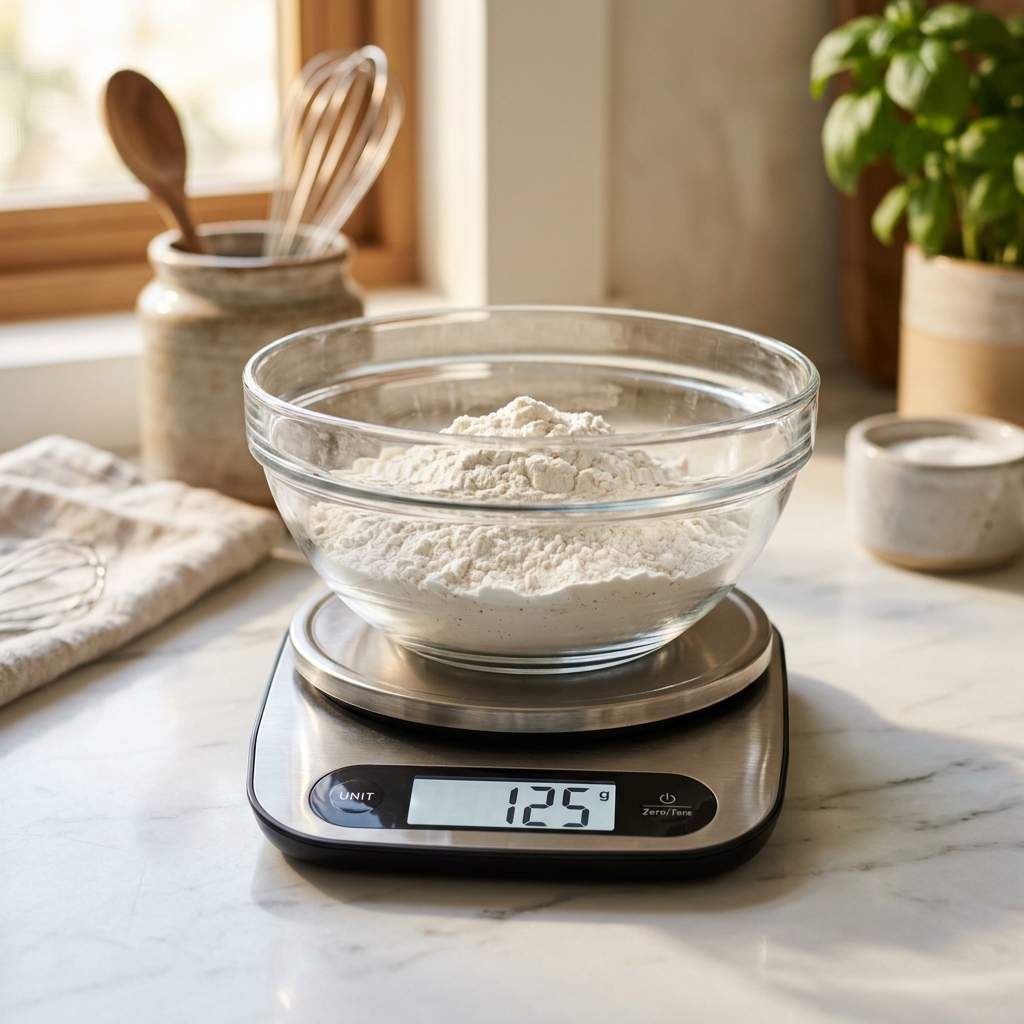
- ›Weight Matters: Almond flour is lighter (about 84g per cup) than all-purpose flour (120g per cup).
Need Perfect Weights?
Because almond flour and regular flour have totally different weights, using cups can throw off your recipe. Run your measurements through our free Cups to Grams Converter to get the exact weights.
Why You Can't Just Swap Them 1:1
Don't let the word "flour" fool you—all-purpose wheat flour and almond flour are completely different ingredients.
All-purpose flour is ground wheat, which means it has gluten. Gluten is the magic protein network that forms when you add liquid and stir. It gives bread its chew, keeps cakes from collapsing, and lets you roll out pie crusts without them tearing. It also drinks up liquids, giving wheat batters their familiar texture.
Almond flour is just finely ground blanched almonds. It has zero gluten, lots of healthy fats (around 50% by weight), and very few carbs. Because there's no gluten, it won't form a structural web when mixed with water—meaning you have to rely on eggs or other binders to hold your bake together. All that fat makes your baked goods incredibly moist, but it also makes them denser and causes cookies to spread.
What this means in your kitchen:
- Baked goods will be flatter and denser since there's no gluten to trap air.
- They'll brown much quicker in the oven.
- They stay moist and fresh longer.
- They can easily turn crumbly if you don't add enough binder.
- You'll get a pleasant, subtle nuttiness and sweetness in the flavor.
The Golden Ratio for Swapping
If you try to swap them cup-for-cup, you'll end up with greasy, heavy baked goods. Here is the rule of thumb that actually works:
Here is a quick reference for common measurements:
| All-Purpose Flour | Almond Flour Equivalent |
|---|---|
| ¼ cup (30g) | 3 tablespoons (21g) |
| ⅓ cup (40g) | ¼ cup (28g) |
| ½ cup (60g) | 6 tablespoons (42g) |
| ¾ cup (90g) | ~9 tablespoons (63g) |
| 1 cup (120g) | ¾ cup (84g) |
| 1½ cups (180g) | 1 cup + 2 tbsp (126g) |
| 2 cups (240g) | 1½ cups (168g) |
The 4 Adjustments You Have to Make
Just swapping the flour isn't quite enough. To make sure your bake turns out great, keep these adjustments in mind:
1. Add an extra egg
Since there's no gluten to hold things together, you need eggs to do the heavy lifting. I recommend adding one extra egg for every cup of almond flour you use. If you want the binding power without making the recipe even richer, just use the egg white and skip the extra yolk.
2. Lower the oven temperature
Almond flour is full of natural fats, which means it browns way faster than wheat. If your recipe calls for 350°F (175°C), drop the dial to 325°F (160°C). Start checking on it a few minutes early too—cookies especially can burn in a flash.
Baker's Note
3. Use a binder for structural recipes
If you're making bread, a loaf cake, or anything you want to slice cleanly, you need help. Add 1/4 teaspoon of xanthan gum or psyllium husk per cup of almond flour. This acts as a stand-in for gluten. For simple bakes like cookies or muffins, you can usually skip this step.
4. Cut back on other liquids
Almond flour brings its own moisture and fat to the table. If your recipe calls for milk, water, or oil, try reducing it by about 10% to 15%. Don't panic if your batter looks thicker or paste-like—that's completely normal.
What Recipes Actually Work?
Some recipes take to almond flour beautifully, while others are a lost cause. Here's the breakdown:
Recipes that work great:
- Cookies: Drop cookies, shortbread, and chewy recipes are perfect. They turn out wonderfully soft and rich.
- Muffins & Quick Breads: Banana bread, pumpkin muffins, and quick breads are very forgiving and handle the swap well.
- Brownies & Blondies: Fudgy desserts actually get better with almond flour's fat content. In fact, many people prefer almond flour brownies over wheat ones!
- Pancakes: They work great, though they will be a bit denser and less fluffy than usual.
- Almond Desserts: Macarons, frangipane, and financiers were practically built for almond flour.
Needs some serious work:
- Layer Cakes: You can do it, but expect a denser, heavier cake. You'll need extra eggs and some careful tweaking of the leaveners.
- Pound Cakes & Loaves: Easier than layer cakes, but the texture will definitely be heavier than the original.
Recipes that will fail:
- Yeasted Breads: Don't try it. Yeast needs wheat starch to feed, and without gluten, there is no structure to trap the rising gases. You'll end up with a brick.
- Puff Pastry & Croissants: These rely completely on layers of gluten and butter. Almond flour cannot replicate this structure at all.
- Pizza Dough: Same issue as bread—no stretch, no chew, no rise.
- Pasta: Just don't do it.
Almond flour is perfect for cookies, brownies, and muffins. But for yeasted breads, puff pastry, or pizza dough, don't waste your ingredients—those require gluten structure to work.
Swapping the Other Way: AP Flour for Almond Flour
What if you're making a recipe designed for almond flour, but want to use standard all-purpose wheat flour instead?
You can swap them 1:1 by volume, but you need to make these changes:
- Cut the butter or oil by 25%. All-purpose flour doesn't have the natural fats that almonds do, so the original recipe's fat level will be way too high.
- Add a splash of extra liquid since wheat flour absorbs more moisture than almond flour.
- Keep in mind you'll lose the gluten-free and low-carb aspects.
Nutritional Differences
Here is how the two flours stack up side-by-side:
| All-Purpose Flour (¼ cup / 30g) | Almond Flour (¼ cup / 28g) | |
|---|---|---|
| Calories | 110 | 160 |
| Carbohydrates | 23g | 6g |
| Protein | 3g | 6g |
| Fat | 0.5g | 14g |
| Fiber | 1g | 3g |
| Gluten | Yes | No |
Almond flour gives you more fat, protein, and calories, but it's gluten-free and very low-carb. If you're baking for dietary needs, it's a fantastic option. Otherwise, if you don't have restrictions, good old all-purpose flour will give you the most consistent bakes.
Try Our Converter
Want to make sure you get the exact amounts?
Use our free Cups to Grams Converter to swap volume to weight. Because almond flour and wheat flour have completely different densities, weighing them on a scale is the easiest way to prevent baking disasters.
More Baking Tools
Keep your baking measurements precise with these free calculators:
- Cups to Grams Converter — Swap volume cups to weight measurements.
- Grams to Cups Converter — Convert weights back to cups.
- Unit Converter — Quickly switch between metric and imperial.
- Recipe Scaler — Easily scale your recipes up or down.
We highly recommend using our Cups to Grams Converter to get the exact weights—it's much more accurate than volume cups when you're substituting.
Frequently Asked Questions
Recommended Reading
How to Measure Flour Correctly: Spoon & Level vs. Scoop & Sweep
The way you scoop flour can alter your baking by 30%. Learn why the spoon-and-level method is your best bet when you don't have a scale.
Butter Measurements Explained: Sticks, Cups, Grams and Tablespoons
How much is a stick of butter? We break down the math for sticks, cups, grams, tablespoons, and ounces, plus look at European vs. American butter.
Bread Flour vs. All-Purpose Flour: When to Make the Switch
Wondering if you can swap all-purpose flour for bread flour? Here is how protein content and water absorption change your bakes, plus how to convert them.