Brown Sugar vs. White Sugar: How They Change Your Bake
In baking, sugar isn't just about sweetness. It's actually a workhorse ingredient that controls how moist your cakes are, how much your cookies spread, and how beautifully they brown.
Most recipes call for granulated white sugar, brown sugar, or a mix of both. While they taste equally sweet, swapping one for the other changes the texture of your cookies and cakes completely. Let's look at how they work in the oven.
At a Glance: Brown Sugar vs. White Sugar
- ›The Chemistry: White sugar is pure sucrose. Brown sugar has molasses mixed in, which adds natural moisture and acidity.
- ›Cookie Texture: White sugar makes cookies spread flat and get crispy. Brown sugar makes them thick, soft, and chewy.
- ›Rising Power: Because brown sugar is acidic, it reacts with baking soda to help your bakes rise. White sugar is neutral and won't trigger that rise.
- ›Weight: A packed cup of brown sugar weighs 200g to 213g, while white sugar sits right at 200g.
Tired of Packing Brown Sugar?
Packing brown sugar into a cup is highly inaccurate. Use our free Cups to Grams Converter to get the exact weight in grams instead.
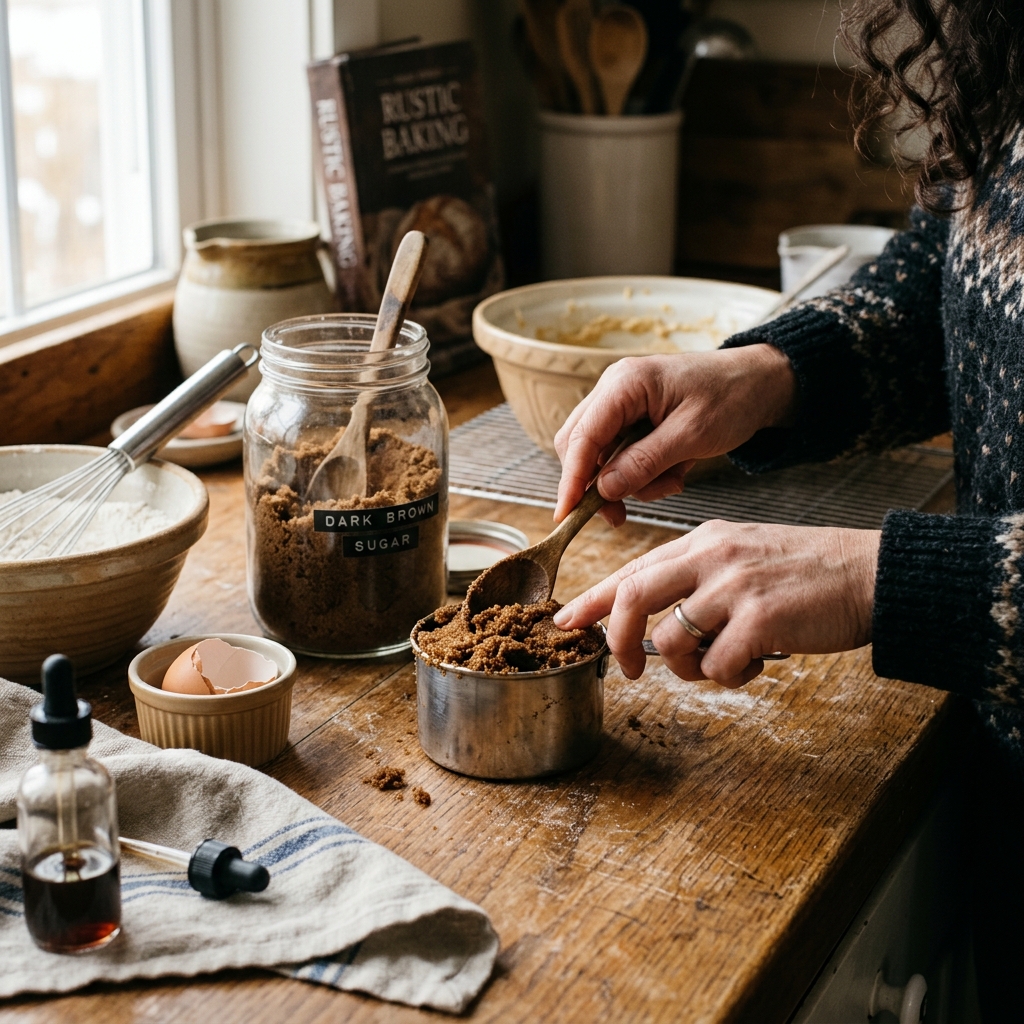
The Secret Ingredient: Molasses
The real difference comes down to one ingredient: molasses.
- White Sugar: This is pure sucrose, refined to strip away all natural molasses. It's dry, crystalline, and has a neutral sweetness.
- Brown Sugar: This is just white sugar with molasses mixed back in (about 3.5% for light brown, and 6.5% for dark brown). That tiny bit of molasses brings moisture, acid, and a deep caramel flavor to your mixing bowl.
Want a thin, crispy cookie? Use white sugar. Want a thick, chewy cookie? Go with brown sugar.
How Sugar Changes Your Bake
Swapping sugars changes three big things in the oven:
- 1. Moisture & Chew: Molasses contains water, which means brown sugar holds onto its moisture in the oven. This is how you get that perfect, bendy, chewy cookie center. White sugar releases its moisture, leaving you with a drier, crispier bite.
- 2. Cookie Spread: White sugar dissolves and melts quickly as it heats up, making cookies spread out flat and thin. Brown sugar is slightly acidic, which helps the proteins in your eggs and flour set faster, keeping the cookies thicker.
- 3. The Rise: Because brown sugar is acidic, it reacts with alkaline baking soda to create carbon dioxide gas. This gives your cookies and cakes a nice little lift. White sugar is neutral, so it won't react with baking soda at all.
Why Volume Measurements Fail
Measuring brown sugar in a cup is a guessing game because it depends entirely on how hard you pack it down. Here is how the weights compare:
| Sugar Type & Method | Weight per US Cup (Grams) | Cookie Texture Effect |
|---|---|---|
| Granulated White Sugar | 200g | Crispy, thin, flat spread |
| Light Brown Sugar (Unpacked) | 170g - 180g | Dry, crumbly texture |
| Light Brown Sugar (Packed) | 200g - 213g | Chewy, thick, soft center |
| Dark Brown Sugar (Packed) | 210g - 220g | Extra chewy, rich molasses flavor |
Baker's Note
Try Our Sugar Converter
Want your cookies to turn out perfectly every time?
Our free Cups to Grams Converter takes care of the math. Convert your white or brown sugar measurements to grams, throw away the measuring cups, and weigh your sugar for consistent bakes.
More Baking Tools
Keep your kitchen measurements accurate with these free calculators:
- Cups to Grams Converter — Swap volume cups to weight measurements.
- Grams to Cups Converter — Convert weights back to cups.
- Recipe Scaler — Easily scale your recipes up or down.
- Unit Converter — Quickly switch between metric and imperial.
Wrapping Up
For the absolute best results, stick to the sugar ratio in your recipe. But if you want to experiment, remember: add more brown sugar for a chewier, richer bake, and add more white sugar if you want thin, crispy edges. Whatever you do, use a kitchen scale to weigh your ingredients—it's the best way to get perfect results every time. Happy baking!
Frequently Asked Questions
Recommended Reading
How to Measure Flour Correctly: Spoon & Level vs. Scoop & Sweep
The way you scoop flour can alter your baking by 30%. Learn why the spoon-and-level method is your best bet when you don't have a scale.
Butter Measurements Explained: Sticks, Cups, Grams and Tablespoons
How much is a stick of butter? We break down the math for sticks, cups, grams, tablespoons, and ounces, plus look at European vs. American butter.
Almond Flour vs. All-Purpose Flour: Can You Substitute Them 1:1?
Thinking of swapping all-purpose flour for almond flour? It's not a simple 1:1 trade. Here's how to adjust your recipe with the right ratio, extra eggs, and temp settings for baking success.