Why a Cup of Flour and a Cup of Sugar Aren't the Same Weight
A cup is a cup, right? If you fill one cup with flour and another with sugar, they take up the exact same amount of room on your kitchen counter.
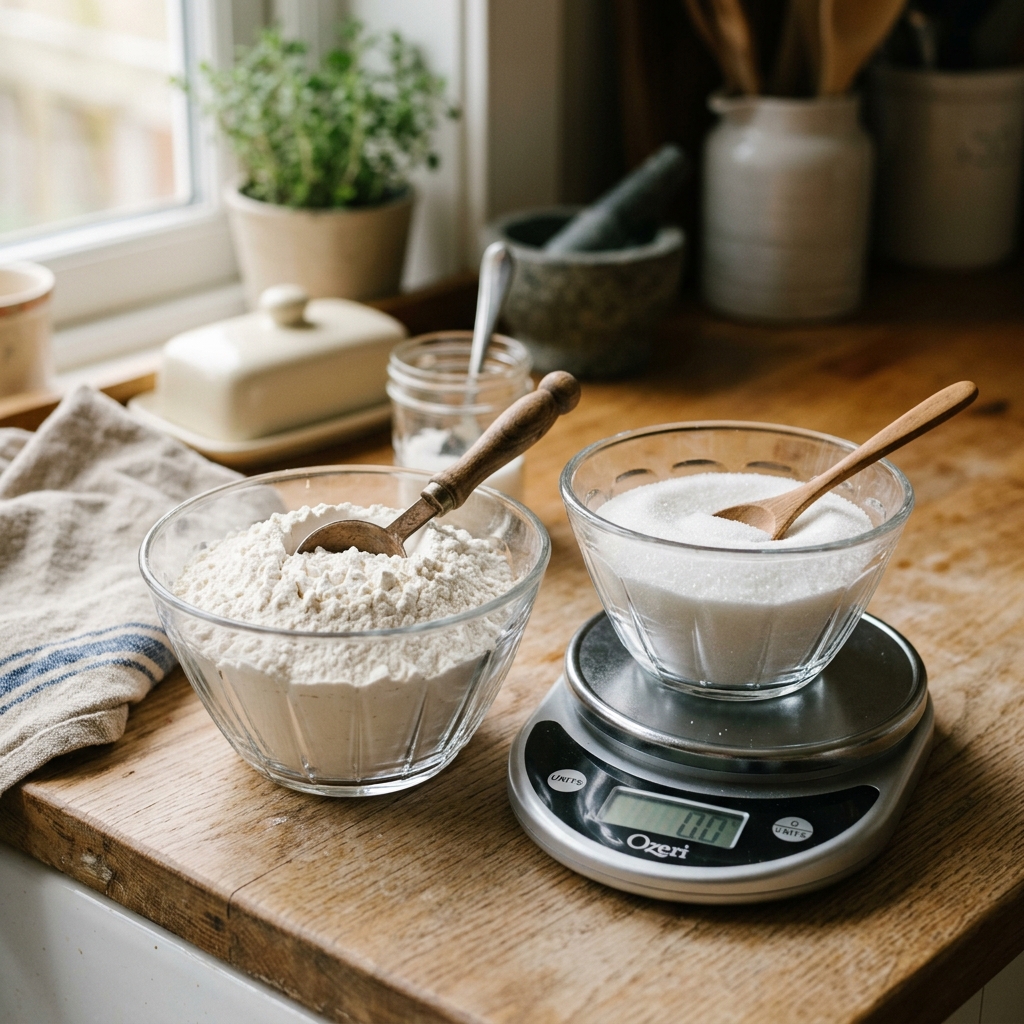
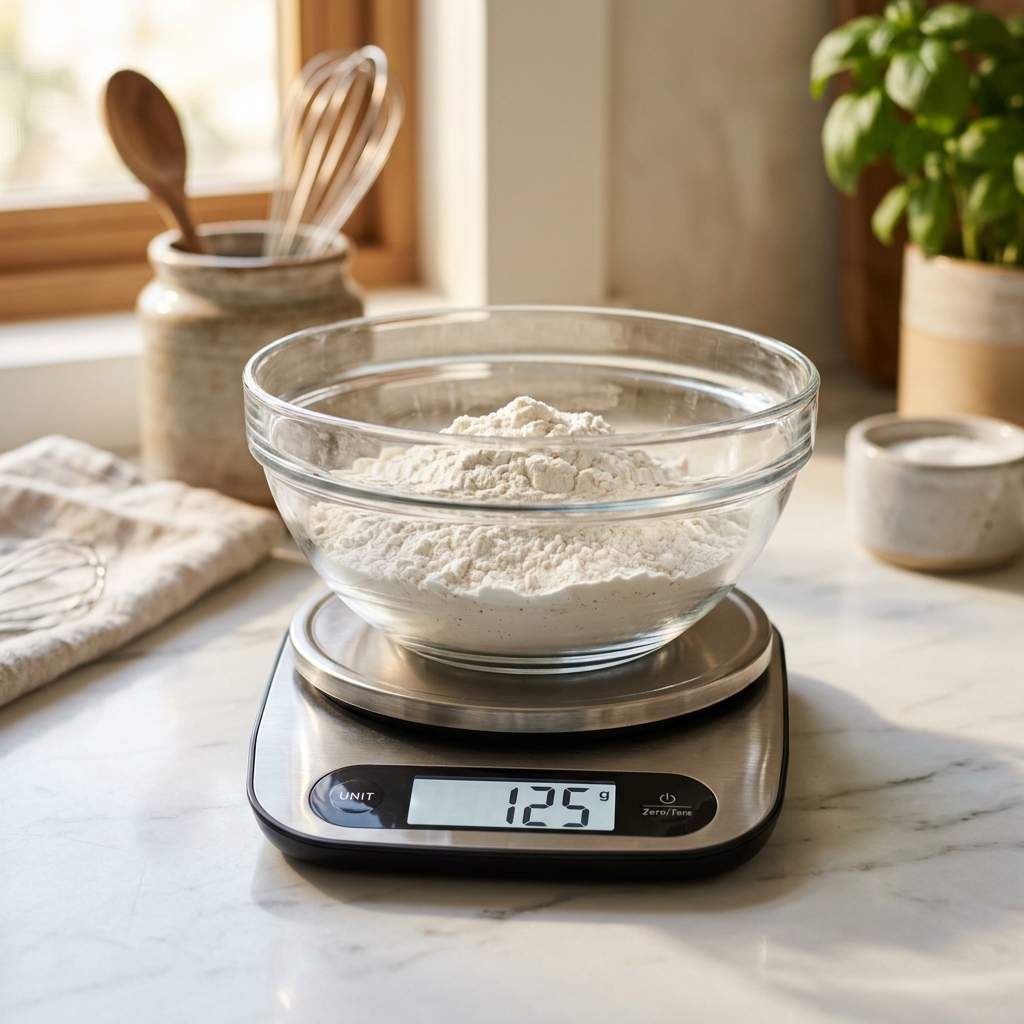
But throw them on a scale, and you'll see a massive difference. The sugar will weigh a solid **200 grams**, while the flour will only hit around **125 grams**. That's a huge 60% difference! Let's talk about why these two baking staples weigh so differently, even though they look like they're the same size.
Quick Cheat Sheet: Flour vs. Sugar Weights
- ›Granulated Sugar is packed: Tiny sucrose crystals slide together with almost no air gaps. 1 cup = **200g**.
- ›Flour is fluffy: Jagged starch particles stick to each other, trapping air pockets. 1 cup = **120g - 125g**.
- ›Cooking Ratios: Since their weights are so different, you can't use the same conversion number for both.
Skip the Mental Math
Stop guessing how much your sugar or flour weighs. Use our free Cups to Grams Converter to get the exact weights for every ingredient instantly.
The Difference in Particle Shape
The reason sugar is so much heavier than flour comes down to how their tiny particles are shaped:
- Sugar Crystals (Sucrose): Granulated sugar is composed of hard, solid crystals. Because they have smooth edges, they slide past one another and pack down naturally under their own weight, leaving almost no air in between them.
- Flour Particles (Starch and Protein): Flour is wheat grain ground into a fine powder. These microscopic pieces have rough, jagged edges that stick together, trapping huge pockets of air. That's why flour is so fluffy and light.
| Baking Ingredient | Density (g/mL) | Weight per US Cup (Grams) | Weight per US Cup (Ounces) |
|---|---|---|---|
| Granulated White Sugar | 0.85 g/mL | 200g | 7.05 oz |
| Packed Brown Sugar | 0.90 g/mL | 213g | 7.51 oz |
| Powdered (Icing) Sugar | 0.48 g/mL | 113g | 4.00 oz |
| All-Purpose Flour | 0.53 g/mL | 125g | 4.41 oz |
| Whole Wheat Flour | 0.55 g/mL | 130g | 4.58 oz |
Granulated sugar is about 60% heavier than flour. Trying to convert them using the same multiplier is a recipe for a baking disaster.
Why This Matters for Your Recipes
In baking, flour and sugar do opposite jobs:
- Flour builds structure: It absorbs water and develops gluten, which gives your cakes and breads their shape and chew.
- Sugar softens structure: It grabs water first, stopping too much gluten from forming. This keeps your cakes tender and moist.
If you try to convert a recipe using a generic number (like assuming every cup weighs 150g), you'll end up with a dry, tough cake from too much flour, and a rubbery, bland mess from too little sugar. You have to convert them separately using their own weights.
Ingredient Note
Skip the Calculations
Want to get your recipe right on the first try?
Our free Cups to Grams Converter handles the difference automatically. Choose your ingredient, enter the cups, and you'll get the exact weights in grams so your bakes turn out perfectly tender.
More Useful Kitchen Tools
Keep your conversions quick and simple with these other free tools:
- Cups to Grams Converter — Swap volume cups for precise grams.
- Ounces Converter — Swap fluid and dry ounces without the headache.
- Unit Converter — Swap between metric and imperial measurements.
- Grams to Cups Converter — Turn grams back into cups when needed.
Wrap Up
A cup of flour and a cup of sugar will never weigh the same because sugar crystals pack down tightly while flour grains trap air. Keeping this in mind—and using a kitchen scale—is the absolute best way to ensure your cakes and cookies turn out perfect every single time.
Frequently Asked Questions
Recommended Reading
Why Professional Bakers Weigh Ingredients Instead of Using Measuring Cups
Why do professional bakers refuse to use measuring cups? Because a cup of flour can weigh anywhere from 120g to 165g. Here is why grams will change your baking forever.
Cups vs. Grams: Why Baking by Weight Actually Works
Ever wonder why your chocolate chip cookies turn out different every time you bake them? Let's talk about why swapping your measuring cups for a digital scale is the easiest upgrade you can make.
Why One Cup of Flour Doesn't Always Weigh the Same
Why does a cup of flour weigh different amounts every time you measure it? Learn how settling, humidity, and technique mess with your recipes.