Cups vs. Grams: Why Baking by Weight Actually Works
If you grew up baking in North America, you probably have a drawer full of nested plastic measuring cups. But step into a professional bakery anywhere in the world, and you'll find scales instead of scoops.
If you want to level up your baking game, it's time to talk about why measuring cups are actually holding you back. Sure, they're familiar, but they're also notoriously inaccurate.
Why Grams Make Baking Easier (And Better)
- ›Volume changes constantly: Cups only measure space. Flour gets packed down, sugar settles, and even the humidity in your kitchen can change how much flour you end up scooping.
- ›Weight never lies: A gram is a gram. 100 grams of flour is always the exact same amount of flour, whether it's super compacted or freshly sifted.
- ›Bypass flour brand differences: Different brands grind their flour differently, meaning their cup weights vary. A scale cuts right through that.
- ›Fewer dirty dishes: Since you can measure everything in one bowl using your scale's tare button, you don't end up with a sink full of dirty cups.
Get Bakery-Quality Accuracy
Stop guessing how packed your flour is. Pop your recipe into our free Cups to Grams Converter and get clean, precise weights in a flash.
Volume vs. Weight: The Simple Science
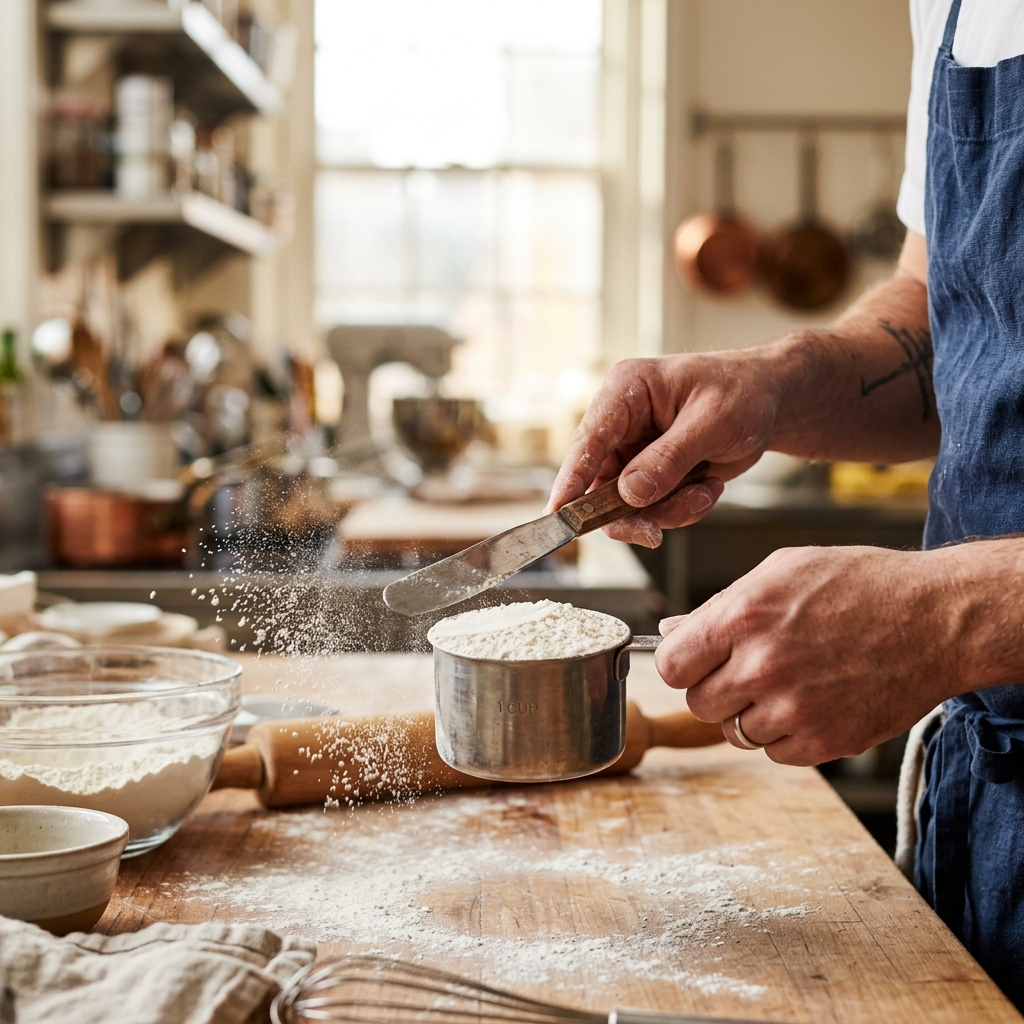
Here's the deal: cups measure volume (how much space something takes up), while grams measure weight.
Think about flour. If it has been sitting in your pantry for a month, it gets compacted. Scoop a cup of that, and it'll weigh way more than a cup of flour you just fluffed up with a fork, even though both fill the exact same cup. That extra flour can make your cookies dry and crumbly.
But grams measure the actual weight of the ingredient. One hundred grams of flour is always exactly one hundred grams of flour, whether it's packed like wet sand or fluffed like snow.
Flour is the biggest offender: depending on how you scoop it, a cup can weigh anywhere from 120 to 160 grams. That's a massive difference!
The Scooping Experiment: How Much Does a Cup Actually Weigh?
To show you how wild the variation can be, look at what happens to the weight of a cup of flour depending on how you fill it:
| Measurement Method | Weight (Grams) | Accuracy Level |
|---|---|---|
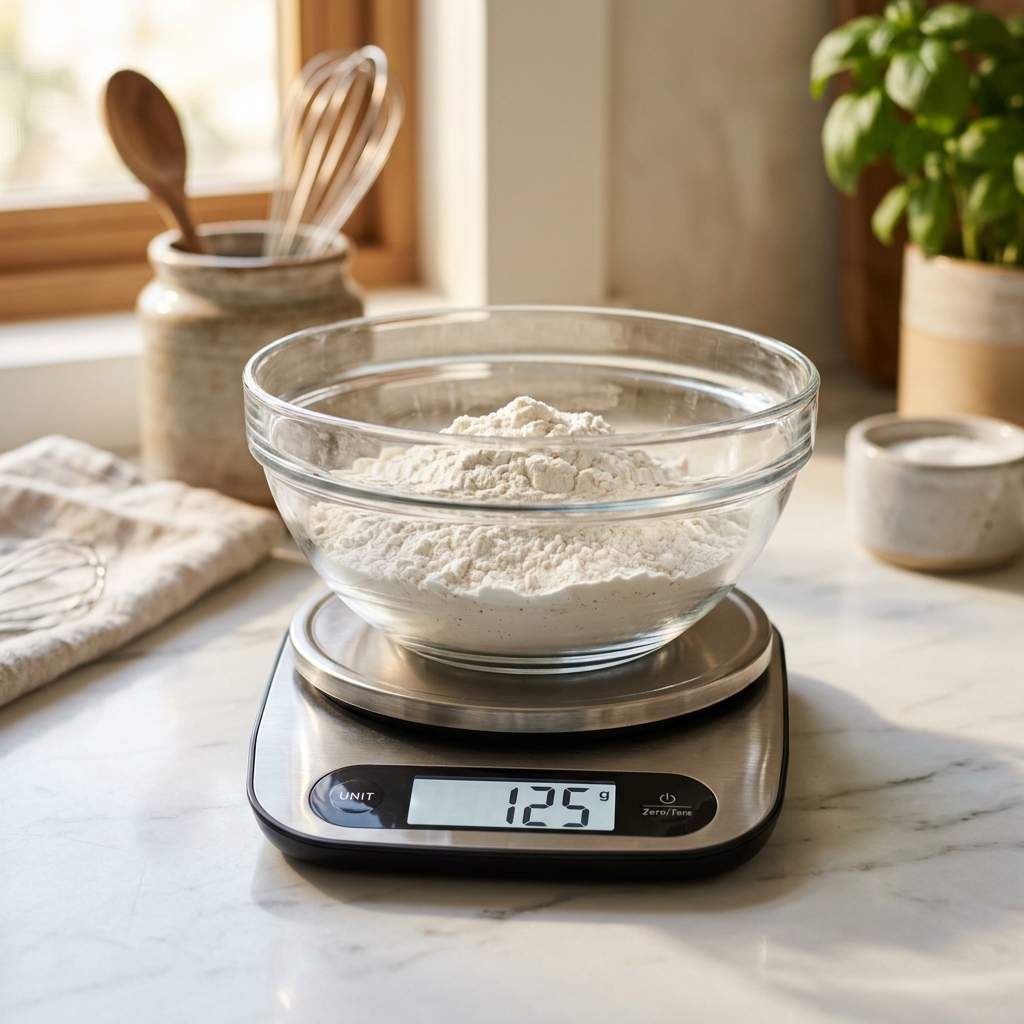
| Kitchen Scale (Grams) | 125g | 100% Accurate |
| Spoon & Leveled Cup | 120g - 128g | Reasonably Consistent |
| Scooped Cup (Direct from Bag) | 140g - 150g | Variable (Too Heavy) |
| Packed Cup (Tapped on Counter) | 155g - 165g | Highly Variable (Very Heavy) |
Why Swapping to a Scale is a Game-Changer
Baking by weight isn't just about being a perfectionist. It actually makes cooking a whole lot easier:
- No more washing cups: You can place your mixing bowl on the scale, dump in your flour, hit 'zero' (tare), dump in your sugar, and repeat. You only dirty one bowl.
- Consistency: When you bake a cake that turns out absolutely perfect, you'll be able to bake it the exact same way next weekend.
- Easy scaling: Want to cut a recipe in half? Halving 150 grams of flour (75g) is a lot easier than figuring out what half of 3/4 cup plus 2 tablespoons is.
Baker's Note
Try the Converter Now
Ready to save yourself some dish-washing time?
Our free Cups to Grams Converter is the easiest way to translate any recipe. Just put your bowl on the scale, tare it, and weigh out your ingredients as you go. You'll be amazed at how much faster it is.
More Useful Kitchen Tools
Keep your kitchen conversions quick and easy with these other free tools:
- Cups to Grams Converter — Swap volume cups for precise grams.
- Grams to Cups Converter — Switch grams back to cups when needed.
- Unit Converter — Quickly move between metric and imperial.
- Baking Pan Size Converter — Swap pan shapes and sizes without ruining your bake.
The Verdict
If you're making a batch of chili or a pot of soup, measuring cups are totally fine—those recipes are forgiving. But baking is science. It's a series of chemical reactions that rely on exact ratios of fat, flour, and liquid. If you want consistently great results, leave the cups in the drawer and grab your scale.
Frequently Asked Questions
Recommended Reading
Why Professional Bakers Weigh Ingredients Instead of Using Measuring Cups
Why do professional bakers refuse to use measuring cups? Because a cup of flour can weigh anywhere from 120g to 165g. Here is why grams will change your baking forever.
Why One Cup of Flour Doesn't Always Weigh the Same
Why does a cup of flour weigh different amounts every time you measure it? Learn how settling, humidity, and technique mess with your recipes.
Why You Should Ditch Your Measuring Cups for a Scale
Baking is all about chemistry, which means weight is king. Here is why measuring cups make your recipes inconsistent, and how a digital scale makes baking faster and cleaner.