How to Scale Cake Recipes Without Them Sinking
Baking a cake is basically science you can eat. That fluffy, perfect rise depends on a delicate balance of baking powder, eggs, and flour.
If you dump your batter into the wrong size pan, you change how deep it sits, which completely messes up how heat reaches the center. Let's make sure that doesn't happen. Here is how to scale your cake recipes by matching pan area and volume.
Quick Rules of Cake Scaling
- ›Check the Area: Compare pan surface areas first to get the exact scaling multiplier you need.
- ›Watch the Fill Line: Only fill cake pans 1/2 to 2/3 full. Never fill them to the brim or they will overflow.
- ›Scale the Leavening down: If you are doubling a cake recipe, cut the baking powder or soda back by about 10% to prevent the cake from rising too fast and collapsing.
- ›Drop the Temp for Deep Cakes: If your batter is sitting deeper than the recipe calls for, drop your oven temp by 25°F and bake it longer to let the middle cook.
Compare Pan Sizes in a Tap
No need to guess. Use our free Baking Pan Size Converter to compare surface areas and scale your cake batter instantly.
Why Pan Size Math Actually Matters
If a recipe calls for a 9-inch round pan and you only have an 8-inch one, you might think, "Eh, close enough."
But here is the catch: because of how circular math works, an 8-inch pan is actually 21% smaller than a 9-inch pan. If you dump a full batch of 9-inch batter into that 8-inch pan, the batter sits way too deep. The outside will bake and set before the heat ever reaches the center, causing the cake to spill over the sides or collapse in a gooey heap in the middle.
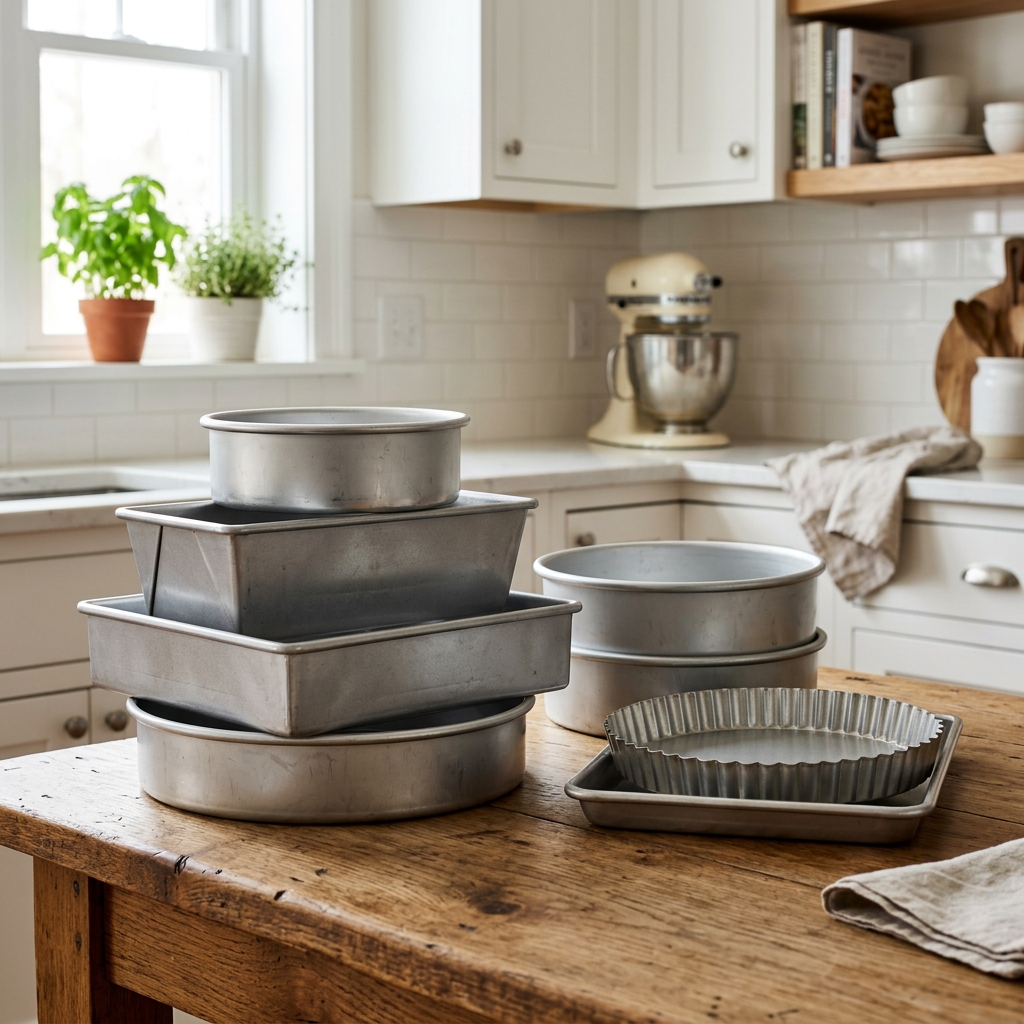
| Baking Pan Size | Pan Type | Surface Area (sq in) | Capacity (Cups) | Capacity vs. 9-in Round |
|---|---|---|---|---|
| 8-inch Round | Circular | 50 sq in | 4 cups | 80% (Reduce batter) |
| 9-inch Round | Circular | 64 sq in | 6 cups | 100% (Baseline) |
| 9-inch Square | Square | 81 sq in | 8 cups | 125% (Scale up 1.25×) |
| 9x13-inch | Rectangular | 117 sq in | 14 cups | 180% (Scale up 1.8×) |
| 10-inch Bundt | Tube Pan | 78 sq in | 12 cups | 190% (Deep pan) |
Here's a handy rule of thumb: a 9x13-inch rectangular pan has about double the surface area of a 9-inch round pan. You'll want to double your recipe to bake a sheet cake at the proper depth.
How to Adjust Baking Times
When you change the pan size, you change how heat travels through the cake. Here is how to handle the timer:
- Same Depth, Bigger Pan: If you scale your ingredients up or down to keep the batter at the exact same depth in a new pan (like doubling a recipe to fill a 9x13-inch pan), the bake time will stay almost exactly the same as the original recipe.
- Deeper Batter, Smaller Pan: If you pour a standard batch into a smaller pan, the batter will be deeper. You'll need to drop the oven temp by 25°F (15°C) and bake it for an extra 10 to 15 minutes to let the deep middle bake through without burning the crust.

The Leavening Secret
Skip the Bake Math
Get a perfect, flat-topped sponge without the guesswork.
Use our free Baking Pan Size Converter to compare pan capacities and scale your cake recipes perfectly every time.
Other Handy Baking Tools
Keep these quick converters nearby for your next cake project:
- Baking Pan Size Converter — Compare areas and scale recipes between pans.
- Recipe Scaler — Scale cake servings and ingredients.
- Cooking Time Scaler — Adjust bake times for different pans.
- Unit Converter — Switch between metric and imperial measurements.
The Bottom Line
Scaling cake recipes successfully is all about matching the surface area of your pans. Keep the batter depth at that 2/3 fill mark, drop the heat slightly if your batter sits deeper, and adjust your leavening when scaling up. You'll get a beautiful, light cake in whatever pan you choose.
Frequently Asked Questions
Recommended Reading
How to Scale a Recipe Up or Down Without Ruining It
Want to scale a recipe up or down? Here is how to calculate your scaling factor and adjust tricky ingredients like yeast, baking powder, and spices so your food still tastes great.
How to Double a Recipe Without Ruining the Bake
Scaling up a recipe isn't just about multiplying every ingredient by two. Here is what actually works for leaveners, spices, and baking times so your double batch turns out great.
How to Halve a Recipe Without Mistakes
Need to cut a recipe in half? Here is how to do the math, split an egg, pick the right pan, and adjust your baking time without ruining your dinner.