Why a Cup of Honey is Heavier Than a Cup of Flour (Understanding Density)
When you're trying to convert a recipe from cups to grams, it's tempting to look for a single 'magic number' to swap them all over. But if you use the same multiplier for flour, sugar, and butter, your cake is going to turn out like a brick.
The culprit here is **density**. In plain English, density is just how much weight fits into a specific space. In your kitchen, it's the reason why one cup of flour is light and powdery, while a cup of brown sugar is heavy and packed. Let's look at how this works in practice.
At a Glance: Kitchen Density Basics
- ›The Formula: Weight (Grams) = Volume (mL) × Density.
- ›Low Density (Light): Flour, cocoa powder, and powdered sugar have tons of tiny air pockets, so they weigh very little.
- ›High Density (Heavy): Honey, molasses, and syrup are tightly packed with no air gaps, making them very heavy.
Let Us Handle the Science
Don't let density math ruin your next batch of cookies. Use our free Cups to Grams Converter to get the exact weights for every ingredient instantly.
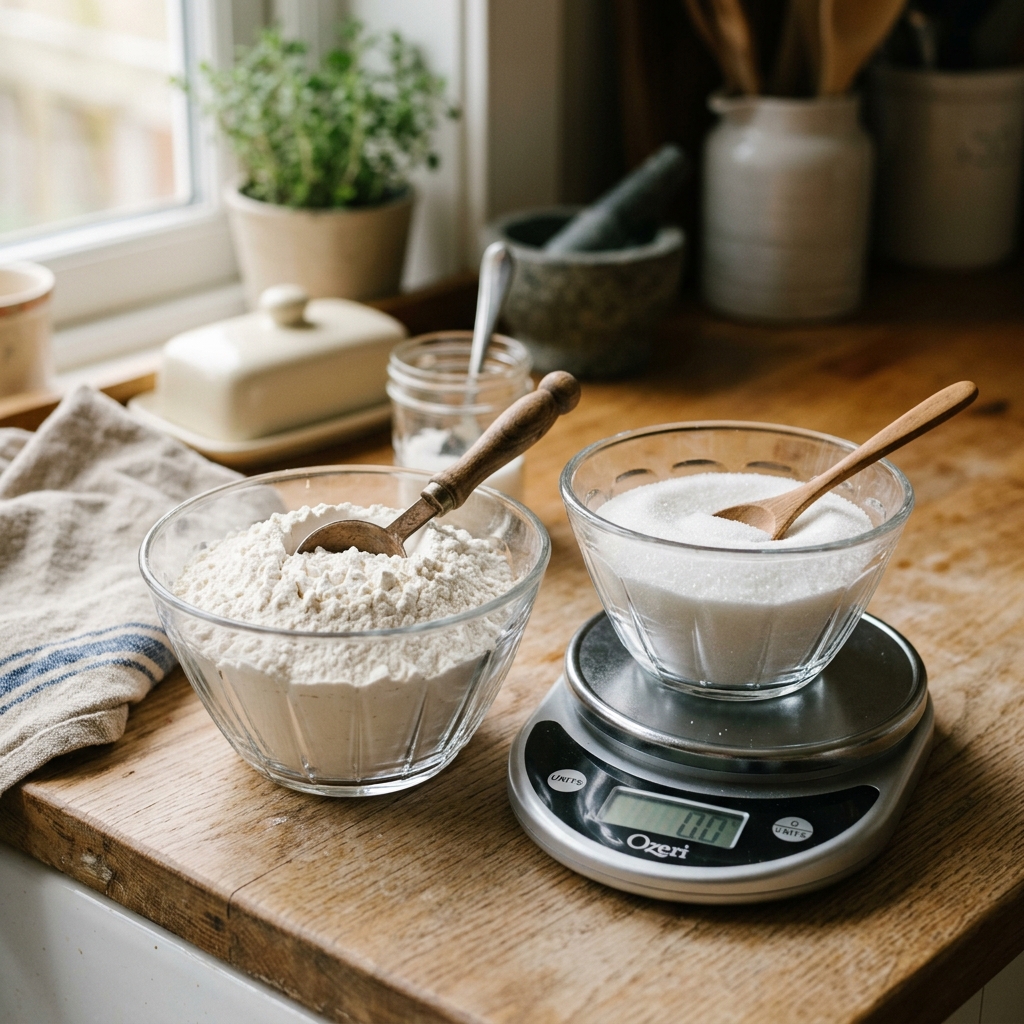
How Ingredients Compare to Water
Water is the golden standard here. Its density is exactly **1.00 gram per milliliter (g/mL)**, which means 100 mL of water weighs exactly 100 grams. Because water is so consistent, we compare everything else to it:
- Heavier than water (Density greater than 1.00): Liquid sweeteners like honey, molasses, and maple syrup. They sink right to the bottom and weigh a ton.
- Lighter than water (Density less than 1.00): Flour, sugar, butter, oil, and oats. If they don't dissolve, they'll float, and they weigh less than water cup-for-cup.
| Ingredient | Density (g/mL) | Weight per US Cup (Grams) | Weight vs. Water |
|---|---|---|---|
| Molasses | 1.44 g/mL | 340g | 144% (Heavier) |
| Whole Milk | 1.03 g/mL | 244g | 103% (Slightly Heavier) |
| Water | 1.00 g/mL | 236.6g | 100% (Baseline) |
| Vegetable Oil | 0.92 g/mL | 218g | 92% (Lighter) |
| Granulated Sugar | 0.85 g/mL | 200g | 85% (Lighter) |
| All-Purpose Flour | 0.53 g/mL | 125g | 53% (Much Lighter) |
| Rolled Oats | 0.38 g/mL | 90g | 38% (Extremely Light) |
A cup is just a hollow space. The density of your ingredient determines how many grams you can cram into it.
How to Calculate It Yourself
If you want to do the math yourself, here is the formula:
Grams = Volume (in mL) × Density Coefficient
Let's convert 2 cups of white sugar:
- Find the volume in mL: 2 cups is about **473.2 mL**.
- Get the sugar density: **0.85 g/mL**.
- Multiply: 473.2 mL × 0.85 = **402 grams**.
Let's be honest: doing this kind of math for every single ingredient in a recipe is a massive pain. That's why we built our calculator—it stores all these numbers so you don't have to keep a calculator on your counter.
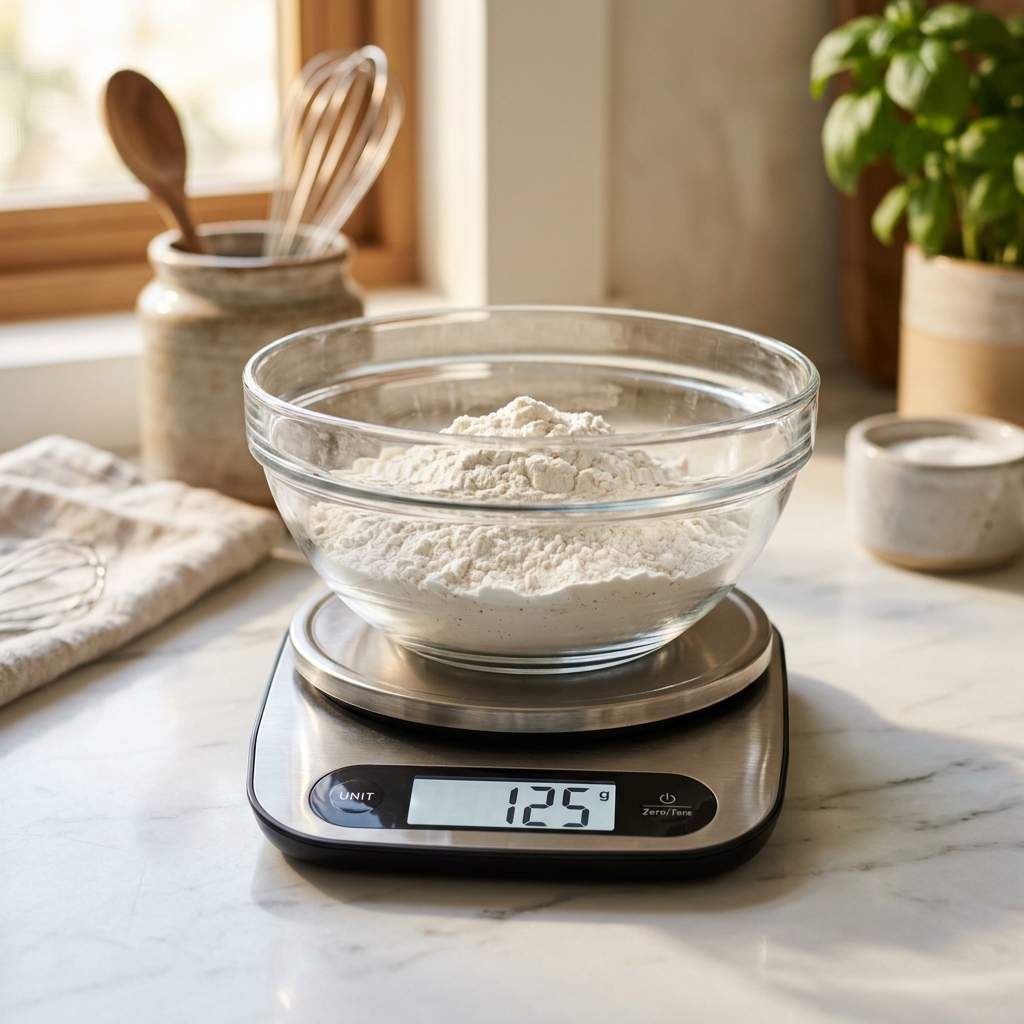
Kitchen Reference
Skip the Math
Want to make conversions easy?
Our free Cups to Grams Converter automatically applies density values for all your ingredients, so you can measure with confidence without touching a calculator.
More Kitchen Resources
Check out these other free conversion tools to keep your bakes perfect:
- Cups to Grams Converter — Swap volume cups for precise grams.
- Ounces Converter — Convert fluid and dry ounces without the headache.
- Unit Converter — Swap between metric and imperial measurements.
- Grams to Cups Converter — Switch grams back to cups when needed.
Wrap Up
Density is the main reason why measuring cups are so unreliable for baking. Once you understand that different ingredients have different weights for the same volume, switching to a scale makes total sense. Your cakes, cookies, and breads will thank you!
Frequently Asked Questions
Recommended Reading
Why Professional Bakers Weigh Ingredients Instead of Using Measuring Cups
Why do professional bakers refuse to use measuring cups? Because a cup of flour can weigh anywhere from 120g to 165g. Here is why grams will change your baking forever.
Cups vs. Grams: Why Baking by Weight Actually Works
Ever wonder why your chocolate chip cookies turn out different every time you bake them? Let's talk about why swapping your measuring cups for a digital scale is the easiest upgrade you can make.
Why One Cup of Flour Doesn't Always Weigh the Same
Why does a cup of flour weigh different amounts every time you measure it? Learn how settling, humidity, and technique mess with your recipes.