How to Adjust Baking Times When Scaling Recipes
It is one of the easiest mistakes to make: assuming that doubling a recipe means you double the bake time, or cutting a recipe in half means you cut the bake time in half.
Think about it this way: if you bake a loaf of bread for 40 minutes, throwing a second loaf into the oven doesn't mean you need 80 minutes. Let's look at how heat actually travels through your food so you can adjust your timer without ending up with a burnt crust or a raw, gooey middle.
Quick Rules of Bake Times
- ›Depth Rules Everything: Heat travels from the outside of your food to the center. How thick your batter or dough is dictates how long it needs to bake.
- ›Two Pans = Same Time: Baking two separate pans of cookies or cakes at once takes the same amount of time as baking just one (give or take a minute).
- ›Thicker Batters Need Extra Time: If your batter is deeper than the recipe intended, drop your oven temp by 25°F and increase your bake time by 30% to 40%.
- ›Thinner Batters Bake Fast: If you halve a recipe but use the original pan size, the batter spreads out thin. It will bake 20% to 30% faster.
Calculate Bake Times Instantly
Changing pan shapes or scaling batter? Use our free Cooking Time Scaler to estimate bake times and adjust temperatures automatically.
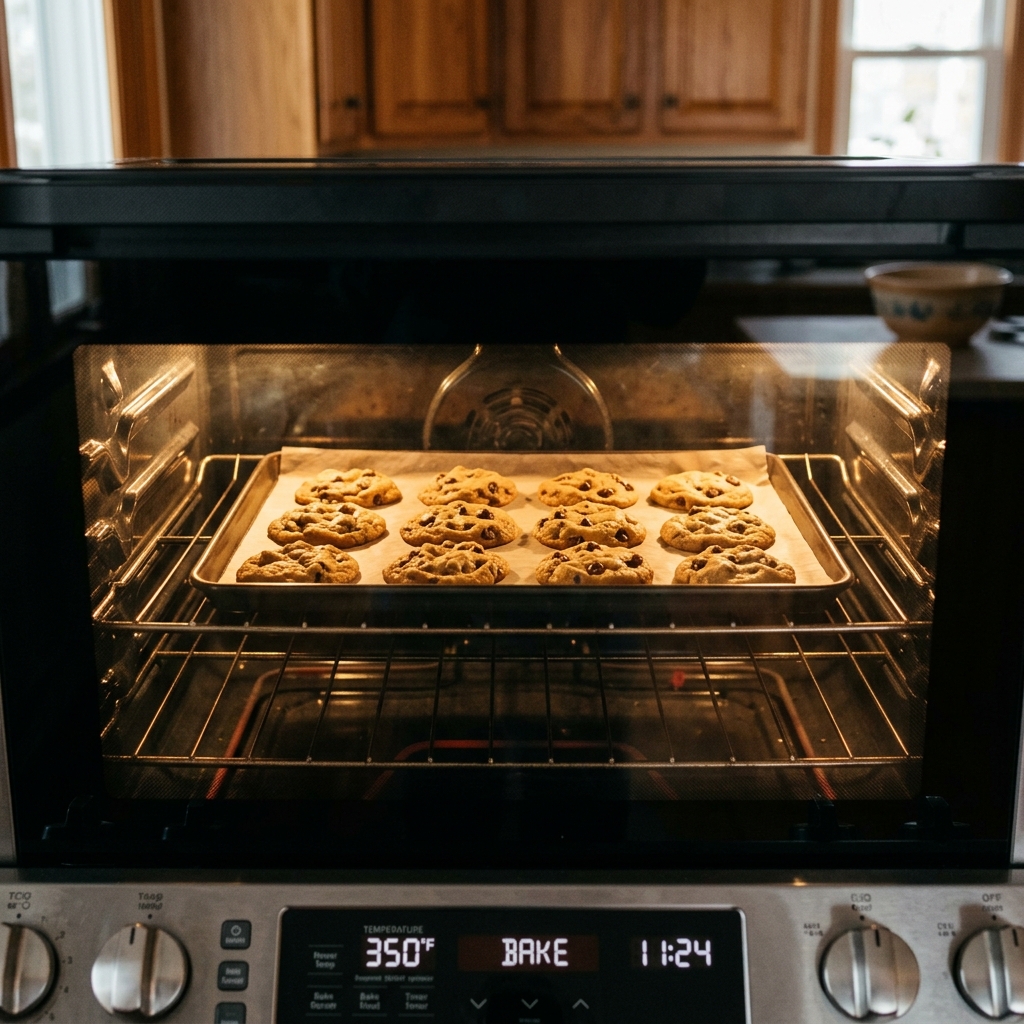
How Heat Travels Through Your Bake
When you put a cake pan into a hot oven, the heat has to work its way from the hot air, through the metal pan, and slowly crawl toward the center of the batter.
Because heat travels through cake batter at a set pace, the depth of your batter determines how long it needs to bake. If your batter is exactly 1.5 inches deep in a 9-inch round pan, and you make a larger batch that also sits 1.5 inches deep in a 12-inch round pan, the heat has to travel the exact same distance to reach the center. That means both cakes will finish baking in about 30 minutes.
| Scaling Scenario | Pan Sizing Strategy | Oven Temperature | Estimated Baking Time |
|---|---|---|---|
| Double Batch (2×) | Use 2 standard pans (separate) | Same (e.g. 350°F) | 100% of original time (same) |
| Double Batch (2×) | Use 1 deep pan (thicker batter) | Reduce by 25°F (325°F) | 130% - 145% of original time |
| Halve Batch (0.5×) | Use 1 smaller pan (same depth) | Same (e.g. 350°F) | 100% of original time (same) |
| Halve Batch (0.5×) | Use 1 standard pan (thin batter) | Same or increase 15°F | 70% - 80% of original time |
Remember: cook time is about how far heat has to travel to reach the middle of your food. Doubling the amount of food does not mean you double the timer.
How to Handle Oven Load
While baking two pans of cookies at the same time takes about the same time as one, there is one catch: **oven load**.
When you put two cold metal pans and double the amount of cold dough into your oven, the temperature inside drops immediately. Plus, having multiple pans in the oven blocks the flow of hot air.
Here is how to adjust:
- Add 2 to 5 minutes to the timer when you've got multiple pans in the oven.
- If your oven has a convection (fan) setting, use it. The fan keeps hot air moving around the pans.
- Rotate your pans halfway through the bake (swap the top and bottom racks and turn them 180 degrees) so everything browns evenly.
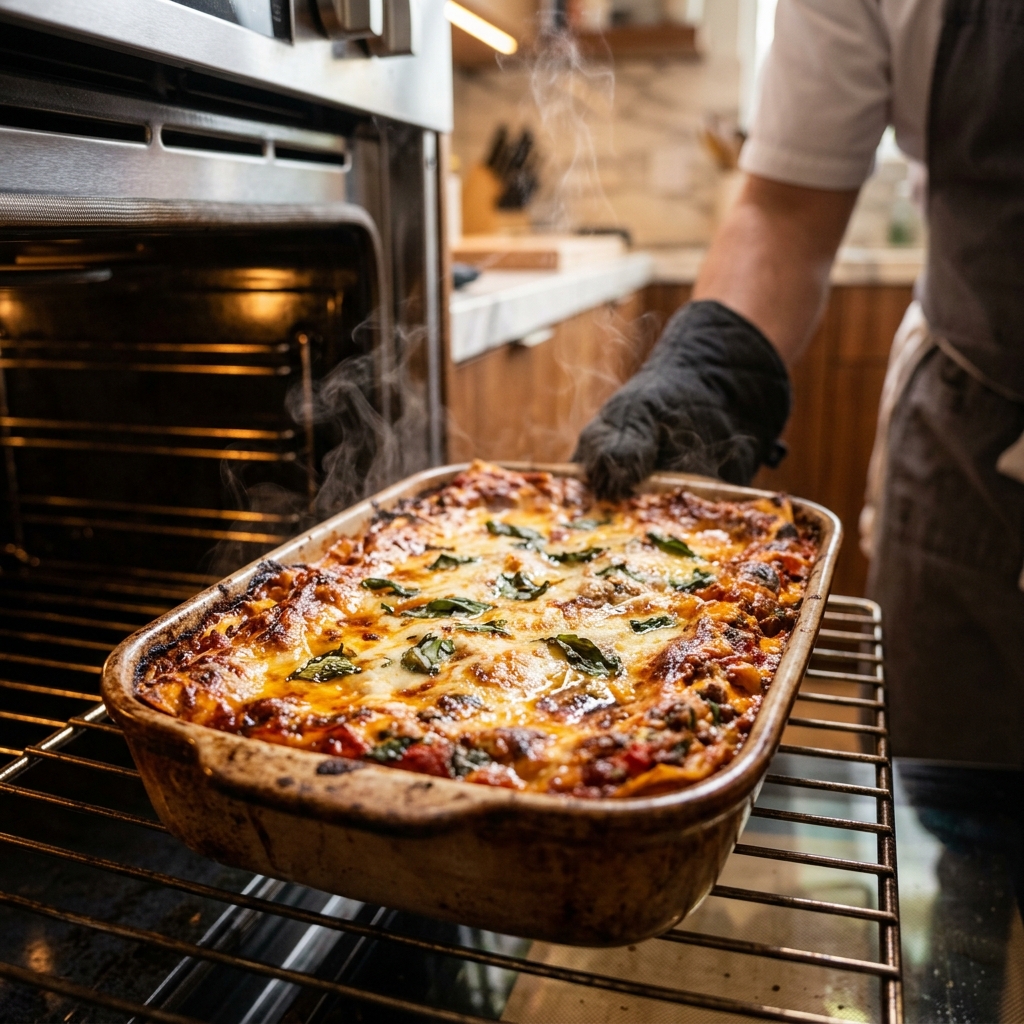
Oven Tricks
Skip the Guesswork
Don't guess how long your scaled cake needs to bake.
Use our free Cooking Time Scaler to calculate the exact baking times and temperature adjustments you need when changing pan shapes or doubling batches.
More Cooking Tools
Keep these handy converters nearby for your next kitchen session:
- Cooking Time Scaler — Adjust bake times for scaled recipes.
- Recipe Scaler — Scale recipe servings up or down.
- Baking Pan Size Converter — Compare areas and scale recipes between pans.
- Unit Converter — Switch between metric and imperial measurements.
The Bottom Line
Bake times are all about how deep your food is, not how much it weighs. If you want to scale a recipe, either use separate pans to keep the batter depth the same, or drop the oven temperature and bake longer if you are making a thicker cake. Always trust your eyes and a toothpick over the kitchen timer!
Frequently Asked Questions
Recommended Reading
How to Scale a Recipe Up or Down Without Ruining It
Want to scale a recipe up or down? Here is how to calculate your scaling factor and adjust tricky ingredients like yeast, baking powder, and spices so your food still tastes great.
How to Double a Recipe Without Ruining the Bake
Scaling up a recipe isn't just about multiplying every ingredient by two. Here is what actually works for leaveners, spices, and baking times so your double batch turns out great.
How to Halve a Recipe Without Mistakes
Need to cut a recipe in half? Here is how to do the math, split an egg, pick the right pan, and adjust your baking time without ruining your dinner.