350°F to Celsius: How to Convert Oven Temperatures Without the Stress
If you've ever started making a recipe only to freeze when it says "preheat to 350°F" because your oven only displays Celsius, don't worry. We've all been there. It's a super common headache in the kitchen, but it's incredibly easy to fix.
Here are the exact conversions you need, a handy temperature chart for all your baking, and a couple of honest truths about how ovens actually work (that recipes usually leave out).
Quick Guide: 350°F Conversions
- ›Fahrenheit: 350°F
- ›Celsius (Conventional): 177°C (Round to 175°C on standard dials)
- ›Celsius (Fan/Convection): 160°C
- ›Gas Mark: Gas Mark 4
Need a Quick Conversion?
If you're dealing with a different temperature, our free Oven Temperature Converter handles the math for you in a second.
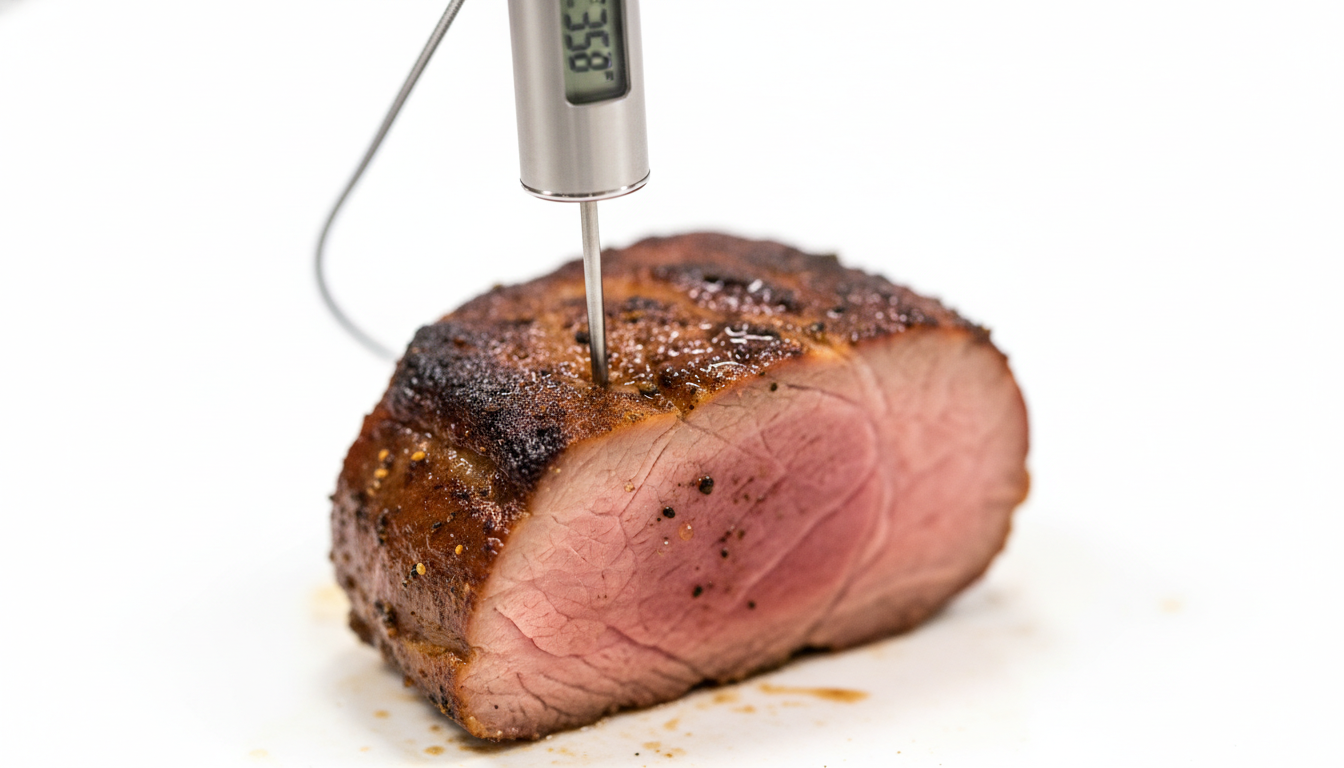
What Is 350°F in Celsius?
Here is the quick math if you want to calculate it yourself: subtract 32, multiply by 5, and divide by 9.
(350 − 32) × 5 ÷ 9 = 176.67°C
In the real world, you'll just set your oven dial to 175°C. Don't stress about the tiny decimal difference—your oven and your cookies won't notice a one-degree variation.
For gas stoves, 350°F corresponds to Gas Mark 4. If you have a fan-forced or convection oven, you'll want to dial it down to 160°C (I'll explain why in a bit).
Why Do So Many Recipes Call for 350°F?
It's not just a random number someone picked. There's some cool kitchen science happening here.
It all comes down to the Maillard reaction. This is the chemical magic that browns your food, creates crusts, and develops those deep, delicious flavors. It kicks off between 300°F and 350°F (about 149°C to 176°C). It's why bread turns golden brown, chocolate chip cookies get crispy edges, and roasted chicken smells so incredible.
At 350°F, the oven is hot enough to brown your food beautifully without burning the outside before the middle has a chance to bake through. It's the perfect middle ground for even cooking.
There's also a bit of history to it. Before modern ovens had digital displays and exact dials, old recipes just called for a "moderate oven." Since 350°F is right in the middle of standard cooking temperatures, it became the default setting for almost everything—and the habit stuck.
But don't treat it like a golden rule. Flaky puff pastry needs high heat (400°F to 425°F) to rise. A delicate cheesecake needs a much gentler bake at 325°F to prevent cracking, and meringues need to dry out slowly at a super-low 200°F. Think of 350°F as your starting point, not the only temperature you'll ever need.
The Maillard reaction starts between 300°F and 350°F, creating that golden browning and deep flavor. 350°F is the sweet spot: it browns the outside beautifully while letting the inside bake all the way through.
The Ultimate Oven Temp Conversion Chart
Here is a simple reference table for any temperature you'll run across in a recipe:
| Fahrenheit | Celsius | Fan/Convection | Gas Mark | Description |
|---|---|---|---|---|
| 225°F | 107°C | 90°C | Gas ¼ | Very cool — meringues, slow drying |
| 250°F | 121°C | 105°C | Gas ½ | Very cool |
| 275°F | 135°C | 120°C | Gas 1 | Cool — slow roasting |
| 300°F | 149°C | 130°C | Gas 2 | Cool |
| 325°F | 163°C | 145°C | Gas 3 | Moderately cool — cheesecake, custard |
| 350°F | 175°C | 160°C | Gas 4 | Moderate — most baked goods |
| 375°F | 190°C | 170°C | Gas 5 | Moderately hot — muffins, quick breads |
| 400°F | 200°C | 180°C | Gas 6 | Hot — roasting, pizza |
| 425°F | 220°C | 200°C | Gas 7 | Hot — puff pastry, crusty bread |
| 450°F | 230°C | 210°C | Gas 8 | Very hot — pizza, high-heat roasting |
| 475°F | 245°C | 225°C | Gas 9 | Extremely hot |
Baker's Note
Fan Oven vs. Conventional: The 25°F / 15°C Rule
If you're using a convection or fan-forced oven, you've got a fan circulating that hot air around. This makes the oven much more efficient—usually about 25°F (or 15°C) hotter than a regular oven set to the same temperature.
If a recipe calls for 350°F (175°C) and you have the fan turned on, you have two choices:
- Drop the temperature to 160°C (325°F) and bake for the recommended time.
- Keep it at 175°C, but start checking if it's done a few minutes early.
For cakes, cupcakes, and cookies, dropping the temperature is usually the safest route. Otherwise, the moving air can dry out the outside of your bakes before they finish rising.
Lots of British and Australian recipes will specify something like "160°C fan," which means they've already done the math for you. If the recipe just says "350°F" or "175°C" without mentioning a fan, assume they mean a traditional, conventional oven.
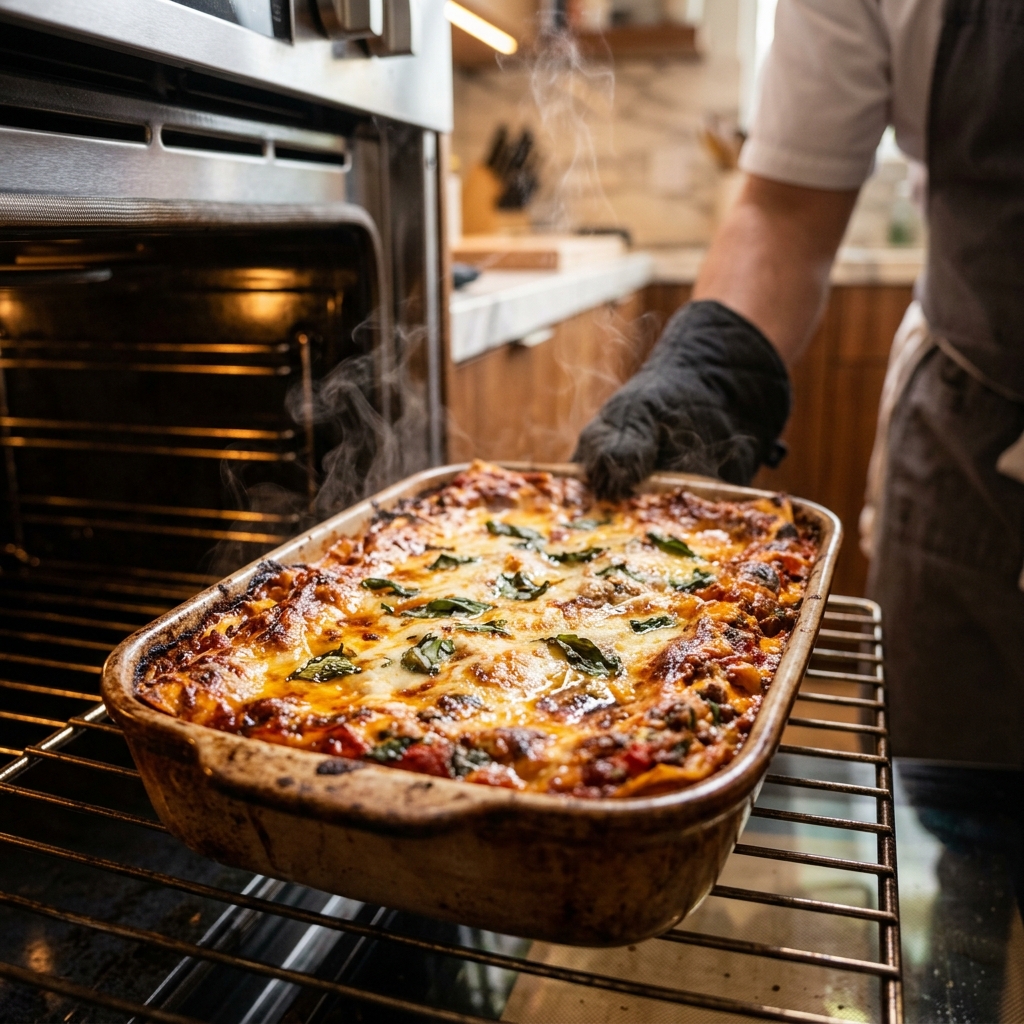
The Honest Truth: Your Oven is Probably Lying to You
Just because your oven dial says 350°F doesn't mean the air inside actually is.
Standard home ovens heat up by turning the element on and off. This creates temperature swings of 20°F to 50°F while you bake. Plus, most ovens aren't perfectly calibrated, and they get less accurate as they age.
An oven set to 350°F might actually be sitting at 325°F or 375°F. That 25-degree difference is more than enough to ruin a delicate cake, make cookies spread too flat, or burn your bread.
The solution is incredibly simple and cheap: get an standalone oven thermometer. You can find a good one for under $15. Hang it on the center rack, and it will tell you exactly how hot your oven really is. If you find out your oven runs 25 degrees cold, just set it to 375°F next time you need 350°F. It's an absolute game-changer for consistency.
Don't trust your oven dial. A cheap oven thermometer is the easiest way to improve your baking overnight—it'll tell you if your "350°F" setting is actually running hot or cold.
Try Our Oven Temp Calculator
Have a custom temperature you need to convert right now?
Our Oven Temperature Converter takes care of the math. Just plug in your Fahrenheit or Celsius temperature, and it will instantly give you the right setting for regular, fan, or gas mark baking.
More Handy Kitchen Tools
Keep your kitchen measurements accurate with these free calculators:
- Oven Temperature Converter — Swap between Fahrenheit, Celsius, and Gas Marks without the math.
- Cooking Time Scaler — Adjust your baking times when you use different pans or temperatures.
- Baking Pan Size Converter — Compare pan sizes and scale your ingredients easily.
- Unit Converter — Quickly convert between metric and imperial measurements.
Wrapping Up
Getting your oven temperature right is the first step to a successful bake, especially when you're working with recipes from around the world. Keep this quick guide bookmarked to swap between Fahrenheit, Celsius, and Gas Marks, and don't forget to drop the temperature a bit if you turn on the convection fan. Happy baking!
Frequently Asked Questions
Recommended Reading
Oven Temperature Conversions: Fahrenheit, Celsius & Gas Mark
Confused by Fahrenheit, Celsius, or Gas Marks? Here is how to swap oven temperatures and adjust for convection fans without burning your dinner.
How to Measure Flour Correctly: Spoon & Level vs. Scoop & Sweep
The way you scoop flour can alter your baking by 30%. Learn why the spoon-and-level method is your best bet when you don't have a scale.
Butter Measurements Explained: Sticks, Cups, Grams and Tablespoons
How much is a stick of butter? We break down the math for sticks, cups, grams, tablespoons, and ounces, plus look at European vs. American butter.