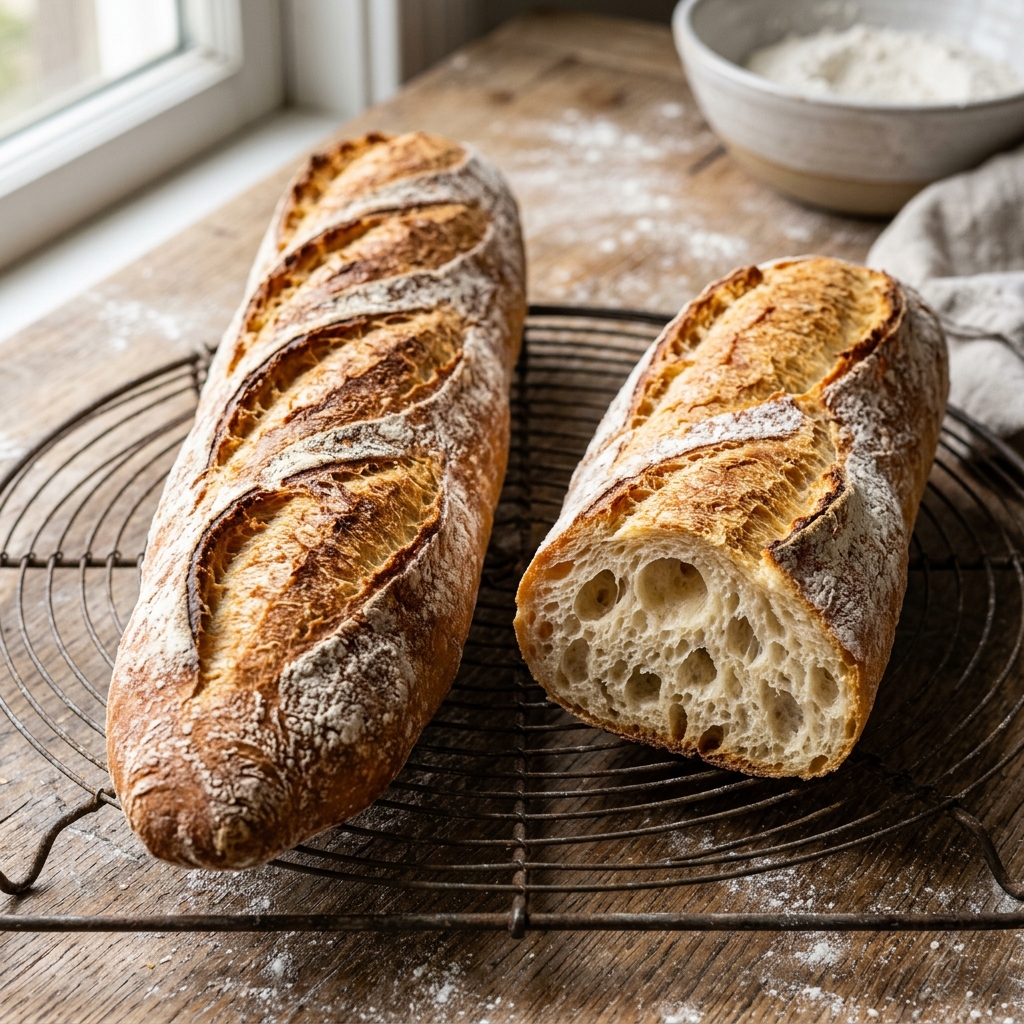
Crispy French Baguettes
Bake classic, bakery-style French baguettes in your own kitchen. This simple step-by-step guide helps you get that perfect airy texture inside and a crispy, golden crust on the outside.
Ingredients
Provides the strength needed to give the bread its classic chewy texture.
Using the right amount of water makes a dough that's easy to shape and holds its form beautifully.
Helps the dough rise reliably and quickly.
Adds flavor and helps strengthen the dough so it rises beautifully.
Step-by-Step Instructions
Mix and knead the dough
In a large bowl, mix your bread flour, yeast, and salt. Pour in the water and stir until you get a shaggy dough. Turn it out onto a clean counter and knead for 8 to 10 minutes until it feels smooth and stretchy.
Stick to bread flour instead of all-purpose. Its higher protein content is what gives baguettes their signature chew and structure.
Let the dough rise
Put the dough in a lightly oiled bowl, cover it with plastic wrap or a damp towel, and let it rise in a warm spot for 1.5 to 2 hours, or until it doubles in size.
Giving the dough a slow rise in a cozy, draft-free spot gives the yeast plenty of time to develop a rich, delicious flavor.
Divide and let the dough rest
Gently turn the dough onto a lightly floured counter. Cut it into 2 equal pieces. Gently shape each piece into a rough log, cover them with a damp towel, and let them rest for 15 minutes.
This quick rest lets the dough relax, making it much easier to stretch out into long baguettes without it snapping back.
Shape the baguettes
Gently flatten one piece of dough into a rectangle. Fold the top third down to the middle, then the bottom third up, pressing the seam sealed with the heel of your hand. Fold the dough in half lengthwise to lock the edges together. Using both hands, gently roll the dough back and forth, starting from the middle and moving outward, until you have a 12-inch log with tapered ends. Repeat with the second piece.
Roll with gentle, even pressure. Getting a tight, smooth outer skin during shaping stops the baguettes from spreading flat when they hit the oven.
The final rise
Lay your baguettes seam-side down on a floured baker's cloth or a sheet of parchment paper, folding the paper up between the loaves to support their sides. Cover them with a dry towel and let them rise for 45 minutes.
Supporting the sides of the dough as it rises forces the baguettes to puff upwards instead of flattening out.
Bake with steam
Preheat your oven to 475°F (246°C) with a baking stone on the middle rack and a metal pan on the bottom rack. Dust the loaves lightly with flour and make 3 quick, diagonal slashes on top of each. Slide them onto the hot stone, pour a cup of hot water into the bottom pan to create a burst of steam, and bake for 22 to 25 minutes until they are deep golden and crispy.
Steam keeps the surface of the dough moist for the first few minutes, allowing the bread to expand fully and producing a beautifully thin, crackly crust.
Nutritional Profile
Macros listed below scale dynamically based on the serving size selected in the recipe card.
Kitchen Timer
Need to scale or convert sizes?
This recipe links with our specialized calculators. Use them to calibrate oven dials, adjust brine salinity percentages, or scale baking pans.
Try the Oven Temperature ConverterTechnique Notes
- Steam is key: Without steam, the crust forms too fast, which stops the bread from rising fully and makes the inside heavy.
- Slash at an angle: Hold your blade at a slight angle to the dough (about 30 degrees) to get those gorgeous, classic baker's cuts that bloom in the oven.
- Make sure your oven temperature is accurate using our Oven Temperature Converter.